Issue 7.3

Issue 7.3 is now online!

The March issue of Methods is now online!

This month’s issue contains two Applications articles and two Open Access articles, all of which are freely available.

METAGEAR: A comprehensive, multifunctional toolbox with capabilities aimed to cover much of the research synthesis taxonomy: from applying a systematic review approach to objectively assemble and screen the literature, to extracting data from studies, and to finally summarize and analyse these data with the statistics of meta-analysis.

Universal FQA Calculator: A free, open-source web-based Floristic Quality Assessment (FQA) Calculator. The calculator offers 30 FQA data bases (with more being added regularly) from across the United States and Canada and has been used to calculate thousands of assessments. Its growing repository for site inventory and transect data is accessible via a REST API and represents a valuable resource for data on the occurrence and abundance of plant species. Continue reading “Issue 7.3”

2015 Robert May Prize Winner: Kim Calders

The Robert May Prize is awarded annually for the best paper published in Methods in Ecology and Evolution by an Early Career Researcher. We’re delighted to announce that the 2015 winner is Kim Calders, for his article ‘Nondestructive estimates of above-ground biomass using terrestrial laser scanning.

Kim led the work on this article and had an international team of co-authors. They have developed a way to harness laser technology for use in measurements of vegetation structure of forests. The study is an important development in the monitoring of carbon stocks for worldwide climate policy-making. Continue reading “2015 Robert May Prize Winner: Kim Calders”

Writing Manuscripts: The Alternative ‘Guide to Authors’

Post provided by EMMA SAYER

If the reviewer doesn't get it, you haven't explained it clearly enough! © Chelm261
If the reviewer doesn’t get it, you haven’t explained it clearly enough! ©Chelm261

“If the reviewer doesn’t get it, you haven’t explained it clearly enough!” This is one quote from my PhD supervisor that I haven’t forgotten. Getting research funded and published depends to a very large extent on our ability to get the point across. Although scientific texts appear to differ wildly from other forms of writing, a good research paper actually follows the same basic principles of effective communication as a newspaper article or advertising text.

There are some fairly simple guidelines on presenting and structuring written information to get the point across and highlight the key messages that are very useful for manuscripts, thesis chapters, proposals, basically any kind of academic writing. At Functional Ecology, we’ve collected tips and tricks from various sources to help authors effectively communicate their research and ideas. Here are our key points:

1) Know Your Audience

A research paper is about communicating your research in a way that makes sense to others. © Vinch

The central principle for any type of communication is: know your audience. A research paper isn’t just about presenting information – it’s about communicating your research to others. When you start preparing a manuscript, you need to think about who will read it. In the first instance, this is probably a busy editor or reviewer, so you should make sure that you get your key messages across without making your readers work too hard. Good science writing isn’t about using clever-sounding words and sentences, it’s about getting the point across in such a way that readers can understand the research and reach the right conclusion (i.e. the one you want them to reach). Continue reading “Writing Manuscripts: The Alternative ‘Guide to Authors’”

International Women’s Day: Advice for Women Starting a Career in STEM

So far this week we’ve heard why some of our female Editors chose to pursue a career in science, what the problems the push for gender equality faces in STEM fields  and where things have been improved in recent years. To close International Women’s Day our posts from the Editors we asked: What advice would you give to female students or Early Career Researchers looking to make a career in academia?

SusanJohnston2Susan Johnston: Mentorship schemes: there are many benefits from being able to have transparent, open and reciprocal discussion on career development, as well as the unwritten rules and experiences of academia. In smaller or less diverse departments, supervisors could encourage their female students to contact potential mentors (male or female) from other institutions. A quick Skype conversation every few months can benefit both the mentee and the mentor.

Carolyn KurleCarolyn Kurle: Don’t be daunted by the idea of how challenging a position in academia might be and don’t remove yourself from the path of academia just because you might be afraid of the potential demands. More and more support exists for mixing successful academic lives with also being a present and fulfilled parent and having a full life outside of research. And the more we expect that to be the case, the more it will exist as reality. Continue reading “International Women’s Day: Advice for Women Starting a Career in STEM”

International Women’s Day: Improvements Towards Gender Equality in STEM?

Yesterday we heard about the barriers to gender equality in STEM, as well as a few things that we’re surprised haven’t been fixed yet and some ideas on how improvements could be made. Today, we’re looking at where things are getting better.

What Changes, Initiatives, Actions etc. Have You Seen that have Impressed You?

Louise Johnson: One notable change for the better is that it’s now unacceptable to invite only men as your symposium speakers – it still happens, but you’d get deservedly yelled at for it. That kind of culture change seems inevitable, but it wouldn’t have happened without a lot of people sticking their necks out and complaining (and often being ignored or called whiny or jealous), so we should thank those people. I see more childcare grants available for conference attendance too, which is great.

Luísa Carvalheiro: Important steps I have seen in some countries are extending time limits to apply to fellowships based on the number of babies a woman has had, and to provide paid maternity leave for those financially dependent on scholar/fellowships. These are steps absolutely necessary in the real world. In an ideal world though, both men and women would have the same societal pressures and benefits. Continue reading “International Women’s Day: Improvements Towards Gender Equality in STEM?”

International Women’s Day: What are the Biggest Problems Facing Gender Equality in STEM?

In recent years, there has been an increasing focus on encouraging women to join STEM fields, but there is still work that needs to be done. We asked our female Associate Editors what the biggest problems facing the push towards gender equality within STEM fields today are. Here are their answers:

janaJana McPherson: My impression is that entering is not the issue. Certainly in my fields of conservation and ecology, there seem to be lots of women undergraduates and graduates and still a very decent proportion of female postdocs. I think it is beyond that level that women start to become increasingly rare. At least in part this likely reflects the fact that it is around post-doc time that biological clocks start ticking, and that it is neither easy nor necessarily desirable to combine starting and raising a family with a prolific production of publications, a heavy teaching load and the need to magic up a bustling research lab out of the blue. To reduce that hurdle, I think universities and academics have to become more accepting and accommodating of part-time effort. And I mean institutionally as well as individually. I have conducted research on a part-time basis for years now, and have seen many colleagues and collaborators in academia positively flummoxed by the concept that NOTHING (work-wise) gets done between when I leave the office on a Thursday at 2pm and when I return to work Monday morning. And yes, my life outside the office involves minutes and the odd hour here and there where I’m not directly interacting with my kids or looking after the household during which I could theoretically get the odd bit of work done. But I have tried that approach and found it rather stressful, sleep-depriving and frustrating for family members competing for my attention with whatever ‘quick’ piece of work I was trying to finish.  So now I leave work at the office and whatever does not get done within office hours just has to wait until I’m next at work, no matter how urgent.

Tamara Munkemuller2Tamara Münkemüller: I guess that the main problems are related to family planning. On the one hand, in many countries it takes long to get a permanent position and it feels like taking a risk to have children before this. On the other hand, one seemingly frequent constellation are couples of two scientists where the man is a bit older. In this situation it often happens that the older person gets a permanent position first and the younger follows and tries to adapt. Then there is the more subtle problem of different communication styles of men and women and numerous selection processes that tend to prefer a communication style that is thought to be more typical for men.

Satu Ramula: I think that one of the current challenges is to keep women in the system. Many female scientists leave academia at some point, which makes the sex ratio skewed as there are not enough qualified women to compete for academic positions at upper levels. Continue reading “International Women’s Day: What are the Biggest Problems Facing Gender Equality in STEM?”

International Women’s Day: What Inspired You to Pursue a Career in Science?

Tomorrow (Tuesday 8 March) is International Women’s Day. To celebrate, we asked  our female Editors a few questions about gender equality (and other issues) in STEM and we’ll be posting their answers over the next four days.

We begin our International Women’s Day posts on a positive note, finding out a little more about our Editors. The first question that we asked them was: What made you want to pursue a career in science and were there any female scientists in particular who inspired you to pursue a career in STEM?

Jana VamosiJana Vamosi: I had no idea what I wanted to do until I was well into my twenties. I took a class in Evolutionary Biology at the end of my undergraduate degree. I loved learning the unifying theories and applying my nascent skills in biomathematics. I went on to start graduate studies with Dr Sally Otto at the University of British Columbia and her mentorship inspired me to consider a career in STEM.

Rachel_MccreaRachel McCrea: I always loved mathematics at school but never realised you could make a career out of it.  I didn’t think about my career path as such when choosing what to study at university but just chose a subject that I enjoyed.  My two (female) A-level maths teachers are to thank for me not pursuing medicine or veterinary science as they really supported me and taught me double-maths at A-level, even though only myself and one other student chose to take it.  I was inspired by Simon Singh’s book on Fermat’s Last Theorem and whilst at university I discovered that even though pure mathematics was not for me I really liked statistics so decided to study for an MSc.  Since then I have never turned back!  Continue reading “International Women’s Day: What Inspired You to Pursue a Career in Science?”

My Entropy ‘Pearl’: Using Turing’s Insight to Find an Optimal Estimator for Shannon Entropy

Post provided by Anne Chao (National Tsing Hua University, Taiwan)

Shannon Entropy

Not quite as precious as my entropy pearl
Not quite as precious as my entropy pearl ©Amboo Who

Ludwig Boltzmann (1844-1906) introduced the modern formula for entropy in statistical mechanics in 1870s. Since its generalization by Claude E. Shannon in his pioneering 1948 paper A Mathematical Theory of Communication, this entropy became known as ‘Shannon entropy’.

Shannon entropy and its exponential have been extensively used to characterize uncertainty, diversity and information-related quantities in ecology, genetics, information theory, computer science and many other fields. Its mathematical expression is given in the figure below.

In the 1950s Shannon entropy was adopted by ecologists as a diversity measure. It’s interpreted as a measure of the uncertainty in the species identity of an individual randomly selected from a community. A higher degree of uncertainty means greater diversity in the community.

Unlike species richness which gives equal weight to all species, or the Gini-Simpson index that gives more weight to individuals of abundant species, Shannon entropy and its exponential (“the effective number of common species” or diversity of order one) are the only standard frequency-sensitive complexity measures that weigh species in proportion to their population abundances. To put it simply: it treats all individuals equally. This is the most natural weighing for many applications. Continue reading “My Entropy ‘Pearl’: Using Turing’s Insight to Find an Optimal Estimator for Shannon Entropy”

On the Tail of Reintroduced Canada Lynx: Leveraging Archival Telemetry Data to Model Animal Movement

Post provided by FRANCES E. BUDERMAN

Animal Movement

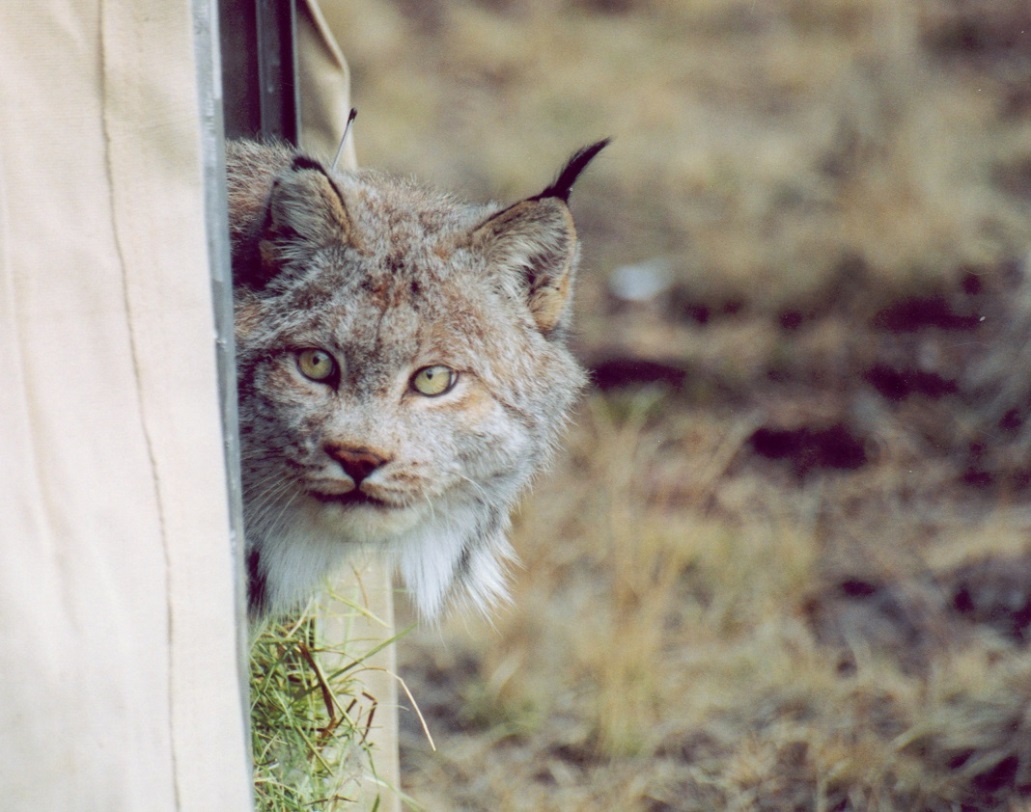
218 Canada lynx were reintroduced to the San Juan Mountains between 1999 and 2006 with VHF/Argos collars. © Colorado Parks and Wildlife

Animal movement is a driving factor underlying many ecological processes including disease transmission, extinction risk and range shifts. Understanding why, when and how animals traverse a landscape can provide much needed information for landscape-level conservation and management practices.

The theoretical underpinnings for modelling animal movement were developed about seventy years ago. Technological developments followed, with radio-collars initially deployed on large mammals such as grizzly bears and elk. We can now monitor animal movement of a wide variety of species, including those as small as a honeybee, at an unprecedented temporal and spatial scale.

However, location-based data sets are often time consuming and costly to collect. For many species, especially those that are rare and elusive, pre-existing data sets may be the only viable data source to inform management decisions. Continue reading “On the Tail of Reintroduced Canada Lynx: Leveraging Archival Telemetry Data to Model Animal Movement”

Inverse Modelling and IPMs: Estimating Processes from Incomplete Information

Post provided by Edgar J. González

In demography, a set of processes (survival, growth, fecundity, etc.) interacts to produce observable patterns (population size, structure, growth rate, etc.) that change over time. With traditional approaches you follow the individuals of a population over some timespan and track all of these processes.

Demographic patterns and processes (Click to expand)

However, depending on the organism, some processes may be very hard to quantify (e.g. mortality or recruitment in animals or plants with long lifespans). You may have observed the patterns for the organism that you’re studying and, even better, measured some, but not all, of the processes. The question is: can we use this limited information to estimate the processes we couldn’t measure? Continue reading “Inverse Modelling and IPMs: Estimating Processes from Incomplete Information”