The quest for a sharp definition of function in biological networks

Robert May Prize Shortlisted Article

Post provided by Alberto Pascual-García
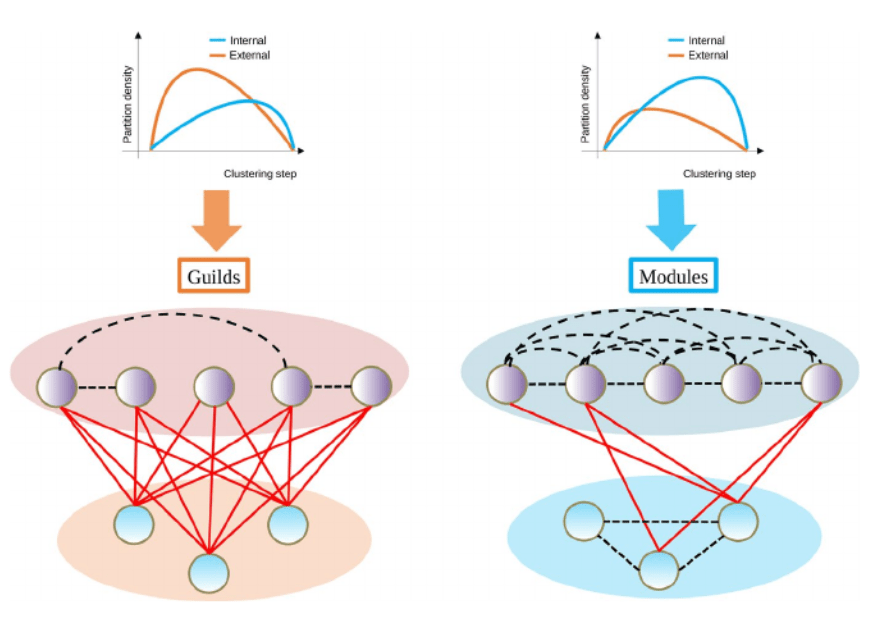
Each year Methods in Ecology and Evolution awards the Robert May Prize to the best paper in the journal by an author at the start of their career. Alberto Pascual has been shortlisted for his article ‘functionInk: An efficient method to detect functional groups in multidimensional networks reveals the hidden structure of ecological communities’. In this post, Alberto discusses the application of the functionInk (functional linkage) package for distinguishing modules and guilds from large multidimensional networks.

Continue reading “The quest for a sharp definition of function in biological networks”

What happens to our understanding of functional diversity when we ignore intraspecific trait variability?

Post provided by Mark Wong

Impressive variability sometimes occurs within a species, such as between these sister ants from the same Carebara sp. colony. Credit: Francois Brassard.

Throw a rock at a conference and you’ll likely hit an ecologist who examines the variation among organisms’ functional traits for one reason or another. From understanding the assembly of communities and their responses to environmental change, to the effects of biodiversity on ecosystem functions, and – well, why not – modelling the global spectrum of ecological form and function, assessments of functional diversity have quickly become the bread and butter of community, ecosystem and macro ecology.

In this blog post, Mark Wong discusses his paper ‘Including intraspecific trait variability to avoid distortion of functional diversity and ecological inference: lessons from natural assemblages’, recently published in Methods in Ecology & Evolution.

Continue reading “What happens to our understanding of functional diversity when we ignore intraspecific trait variability?”

A brief history about the R package ‘metan’

Post provided by Tiago Olivoto

Este post também pode ser lido em Português

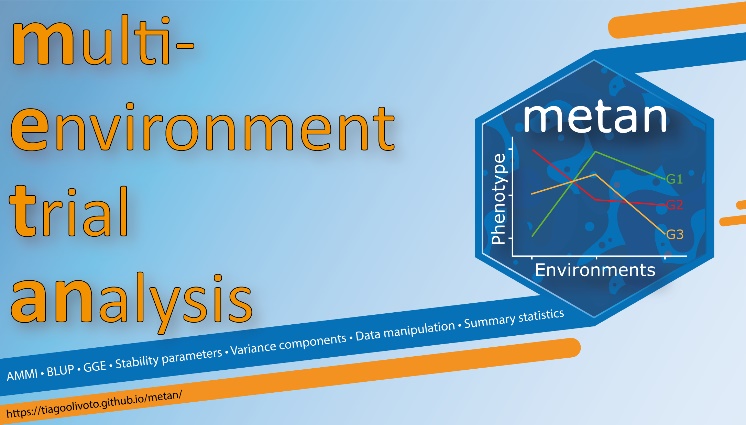
In our recent paper in Methods in Ecology and Evolution, Alessandro Lúcio and I describe a new R package, metan, for multi-environment trial analysis. Multi-environment trials are a kind of trial in plant breeding programs where several genotypes are evaluated in a set of environments. Analyzing such data requires the combination of several approaches including data manipulation, visualization and modelling. The latest stable version of metan (v1.5.1) is now on CRAN. So, I want to share the history about my first foray into using R, creating an R package, and submitting a paper to a journal that I’ve never had submitted before.

Continue reading “A brief history about the R package ‘metan’”

Uma breve história sobre o pacote R ‘metan’

Post ESCRITO POR Tiago Olivoto

This post is also available in English

Em nosso recente artigo na Methods in Ecology and Evolution, Alessandro D. Lúcio e eu descrevemos um novo pacote R para análise de ensaios multi-ambientes chamado metan. Ensaios multi-ambientes são um tipo de ensaio em programas de melhoramento de plantas, onde vários genótipos são avaliados em um conjunto de ambientes. A análise desses dados requer a combinação de várias abordagens, incluindo manipulação, visualização e modelagem de dados. A versão estável mais recente do metan (v1.5.1) está disponível agora no repositório CRAN. Então, pensei em compartilhar a história da minha primeira incursão no uso do R criando um pacote e submetendo um artigo para uma revista que nunca havia submetido antes.

Continue reading “Uma breve história sobre o pacote R ‘metan’”

What Biases Could Your Sampling Methods Add to Your Data?

Post provided by ROGER HO LEE

這篇博客文章也有中文版

Have you ever gone fishing? If so, you may have had the experience of not catching any fish, while the person next to you got plenty. If you walked along the pier or bank, you may have seen that other fishermen and -women caught fish of various shapes and sizes. You’d soon realise that each person was using a different set of equipment and baits, and of course, that the anglers differed in their skills and experience. Beneath the water were many fish, but whether you could catch them, or which species could even be caught, all depended on your fishing method, as well as where and how the fish you were targeting lived.

Designing Sampling Protocols

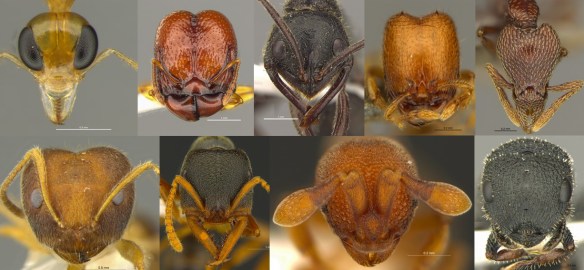
Head view of different ant species found in Hong Kong and further in SE Asia.
Head view of different ant species found in Hong Kong and further in South East Asia.

This is a lot like the situation that ecologists often face when designing sampling protocols for field surveys. While a comprehensive survey will yield the most complete information, few of us have the resources to capture every member of the community we’re studying. So, we take representative samples instead. But the method(s) used for sampling will only allow us to collect a subset of the species which are present. This selection of the species is not random per se – it’s dependent on species’ life history. Continue reading “What Biases Could Your Sampling Methods Add to Your Data?”

Decoupling Functional and Phylogenetic Dissimilarity between Organisms

Francesco de Bello describes the main elements of the method he has recently published in Methods in Ecology and Evolution. The method aims at decoupling and combining functional trait and phylogenetic dissimilarities between organisms. This allows for a more effective combination of non-overlapping information between phylogeny and functional traits. Decoupling trait and phylogenetic information can also uncover otherwise hidden signals underlying species coexistence and turnover, … Continue reading Decoupling Functional and Phylogenetic Dissimilarity between Organisms

What is Dark Diversity?

Post provided by ROB LEWIS & MEELIS PÄRTEL

Our understanding of how biological diversity works has been advanced by a long history of observing species and linking patterns to ecological processes. However, we generally don’t focus as much on those species that aren’t observed, or in other words ‘absent species’. But, can absent species provide valuable information?

Dark diversity – a set of species absent from a particular site but which belong to its species pool – has the potential to be as ecologically meaningful as observed diversity. Part of the species pool concept, understanding dark diversity is relatively straightforward.

The Basic Theory of Dark Diversity

To begin learning about dark diversity, there are two important terms that we need to define: ‘species pool’ and ‘focal community’. A ‘species pool’ is a set of species present in a particular region or landscape that can potentially inhabit a particular observed community because of suitable local ecological conditions.

A ‘focal community’ is the set of species that have been observed in a particular region or landscape (this is the ‘observed community’ and can also be referred to as alpha diversity). For a given focal community to become established, the species within it must have overcome dispersal pressures as well as environmental and biotic filters.

A

Continue reading “What is Dark Diversity?”