A new graphical interface and toolkit for phylogenetic analyses

Post provided by Daniel Edler

Each year Methods in Ecology and Evolution awards the Robert May Prize to the best paper published in the journal by an author at the start of their career. Ten Early Career Researchers made the shortlist for this year’s prize, including Daniel Edler who is a PhD student at Umeå University in Sweden. In this interview, Daniel shares insights on his paper ‘raxmlGUI2.0: a graphical interface and toolkit for phylogenetic analyses using RAxML’.

Continue reading “A new graphical interface and toolkit for phylogenetic analyses”

A Surgical Approach to Dissection of an Exotic Animal

Post provided by Aaron T Irving, Justin HJ Ng and Lin-fa Wang

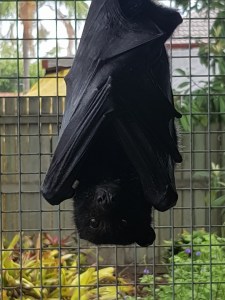
An Australian black flying fox – missing an ear, but fit for release.

Bats. They’re amazing creatures. Long-lived (with relevance to their body size), echolocating (for microbats and some megabats), metabolically-resilient (apparently resilient to most virus infections) flying mammals (with heart beats up to 1200 bpm for hours during flight). There are 1,411 species of this incredible creature. But very little is known about their physiology and unique biological traits. And detailed evolutionary analysis has only just begun.

The problem is, they’re an ‘exotic’ animal (wildlife that most people do not come into contact with). Being a long-lived animal producing minimal offspring (most only have one baby per year), they’re not suited to the kind of experimental studies we do with other animals like mice. Unavoidably, some aspects of biology require the use of tissues and cells. These samples can be used for sequencing, genomics, molecular evolution studies, detailed transcriptomic analysis, functional experiments with specific cell types and much more. Some methodology is beginning to be published – such as capture techniques and wing punch/genomic isolation – but there’s been an absence of protocols for the processing of bats. This is essential for the field to maximise the potential application of each individual and for minimising non-essential specimen collection.

Continue reading “A Surgical Approach to Dissection of an Exotic Animal”

A More Reliable Method for Estimating Abundance: Close-Kin Mark-Recapture

Post provided by DANIEL RUZZANTE

Knowing how many individuals there are in a population is a fundamental objective in ecology and conservation biology. But estimating abundance is often extremely difficult. It’s particularly difficult in the management of exploited marine, anadromous and freshwater populations. In marine fisheries, abundance estimation traditionally relies on demographic models, costly and time consuming mark recapture (MR) approaches if they are feasible at all, and the relationship between fishery catches and effort (catch per unit effort or CPUE). CPUEs can be subject to bias and uncertainty. This is why they tend to be considered relatively unreliable and contentious.

Close-Kin Mark-Recapture: Reducing Bias and Uncertainty

There is an alternative method though. It’s known as “Close-Kin Mark-Recapture” (CKMR), and is grounded in genomics and was first proposed by Skaug in 2001. The method is based on the principle that an individual’s genotype can be considered a “recapture” of the genotypes of each of its parents. Assuming the sampling of offspring and parents is independent of each other, the number of Parent-Offspring pairs (POP) genetically identified in a large collection of both groups can be used to estimate abundance. Continue reading “A More Reliable Method for Estimating Abundance: Close-Kin Mark-Recapture”

Issue 10.7: Aquatic Ecology, Zeroes, Sequencing and More

The July issue of Methods is now online!

We’ve got a bumper issue of Methods in Ecology and Evolution this month. In the 200+ pages, you’ll find articles about measuring species distributions and abundances, integrated population models, and working at the whole-plant scale.

We’ve got six papers that are freely available to absolutely everyone this month too. You can find out about two of the Open Access papers in the Applications and Practical Tools section below. In the third, Chen et al. show that tree assemblages in tropical forest ecosystems can present a strong signal of extensive distributional interspersion.

Find out a little more about the new issue of Methods in Ecology and Evolution below. Continue reading “Issue 10.7: Aquatic Ecology, Zeroes, Sequencing and More”

Early Spring: Predicting Budburst with Genetics

Below is a press release about the Methods in Ecology and Evolution article ‘On the importance of accounting for intraspecific genomic relatedness in multi‐species studies‘ taken from the Université de Montréal.

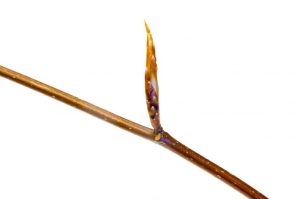
Bud of American beech (Fagus grandifolia). ©Tim Savas

Researchers from Canada and the USA found that tree and shrub genetics can be used to produce more accurate predictions of when leaves will burst bud in the spring. Their study was published in Methods in Ecology and Evolution.

Although climate sceptics might find it hard to believe with this year’s endless snow and freezing temperatures, climate change is making warm, sunny early springs increasingly common. And that affects when trees start to leaf out. But how much?

Simon Joly, biology professor at Université de Montréal and Elizabeth Wolkovich, an ecology professor at University of British Columbia, showed that a plant’s genetics can be used to produce more accurate predictions of when its leaves will burst bud in spring. Continue reading “Early Spring: Predicting Budburst with Genetics”

Using Dual RNA-seq to Investigate Host-Pathogen Systems When Genomic Resources are Limited

Post provided by KAYLEIGH O’KEEFFE

Tall fescue infected with fungal pathogen, Rhizoctonia solani. ©Brooklynn Newberry

Pathogens and the infectious diseases that they cause can have devastating impacts on host individuals and populations. To better understand how pathogens are able to cause disease, we can investigate the genetic mechanisms underlying the infection process. Hosts may respond to infection by upregulating defence pathways. Pathogens, in turn, evade these host immune responses as they infect and cause disease. As this process unfolds and each organism responds to the other, gene expression changes in both the host and the pathogen. These gene expression changes can be captured by dual RNA‐seq, which simultaneously captures the gene expression profiles of a host and of a pathogen during infection. Continue reading “Using Dual RNA-seq to Investigate Host-Pathogen Systems When Genomic Resources are Limited”

Editor Recommendation: The Ecologist’s Field Guide to Sequence-Based Identification of Biodiversity

Post provided by Pierre M Durand

A fossilized species of the diatom Thalassiosira. B. A species of the dinoflagellate Prorocentrum. Image provided by A. Ndhlovu).
A fossilized species of the diatom Thalassiosira. B. A species of the dinoflagellate Prorocentrum. (Image provided by A. Ndhlovu).

As any reader of Methods in Ecology and Evolution will know, advances in technologies and methodologies used by ecologists and evolutionary biologists are never-ending. Coupled with the tendency for researchers to become ever more specialised, this means that keeping up to date with all the advances is challenging at best. Occasionally, new advances revolutionise the kinds of questions we ask and encourage us to develop new approaches to answer them. One of these huge advances emerged from the ‘-omics’ revolution.

The application of -omics methodologies to evolution and ecology has been particularly rapid. These technologies usually aren’t part of the basic science education in these fields – it’s more usual for computational biologists to cross over to ecology and evolution than the other way around. The review by Simon Creer and colleagues ’The ecologist’s field guide to sequence-based identification of biodiversity’ helps bridge this gap. It’s not too technical, but sufficiently detailed, and it provides a very handy overview of how genomics, transcriptomics and their meta-analyses can be applied to evolutionary ecology. The paper is filled with enormously helpful workflows, pointers, examples and, as the title suggests, is a guide for those who are not experts in sequence based technologies. Continue reading “Editor Recommendation: The Ecologist’s Field Guide to Sequence-Based Identification of Biodiversity”

Issue 9.2

Issue 9.2 is now online!
The February issue of Methods is now online!

This double-size issue contains six Applications articles (one of which is Open Access) and two Open Access research articles. These eight papers are freely available to everyone, no subscription required.

 Temperature Manipulation: Welshofer et al. present a modified International Tundra Experiment (ITEX) chamber design for year-round outdoor use in warming taller-stature plant communities up to 1.5 m tall.This design is a valuable tool for examining the effects of in situ warming on understudied taller-stature plant communities

 ZoonThe disjointed nature of the current species distribution modelling (SDM) research environment hinders evaluation of new methods, synthesis of current knowledge and the dissemination of new methods to SDM users. The zoon R package aims to overcome these problems by providing a modular framework for constructing reproducible SDM workflows.

 BEIN R Package: The Botanical Information and Ecology Network (BIEN) database comprises an unprecedented wealth of cleaned and standardised botanical data. The bien r package allows users to access the multiple types of data in the BIEN database. This represents a significant achievement in biological data integration, cleaning and standardisation.

Continue reading “Issue 9.2”

Microbial Methods Virtual Issue

The BES Microbial Ecology Special Interest Group is running a workshop today (Thursday 2 November) on Novel Tools for Microbial Ecology. To compliment this workshop, Xavier Harrison has edited a Virtual Issue of the best Methods in Ecology and Evolution articles on advances in methods of studying microbial evolution and ecology from the past few years.

Advances in Next-Generation Sequencing (NGS) technology now allow us to study associations between hosts and their microbial communities in unprecedented detail. However, studies investigating host-microbe interactions in the field of ecology and evolution are dominated by 16S and ITS amplicon sequencing. While amplicon sequencing is a useful tool for describing microbial community composition, it is limited in its ability to quantify the function(s) performed by members of those communities. Characterising function is vital to understanding how microbes and their hosts interact, and consequently whether those interactions are adaptive for, or detrimental to, the host. The articles in this Virtual Issue cover a broad suite of approaches that allow us to study host-microbe and microbe-microbe interactions in novel ways.

All of the articles in the Microbial Methods Virtual Issue will be freely available for the next two months. You can find out a little more about each one below. Continue reading “Microbial Methods Virtual Issue”

New Associate Editors

Today we are welcoming two new people to the Methods in Ecology and Evolution Associate Editor Board. Pierre Durand is joining us from the University of the Witwatersrand (South Africa) and Andrew Mahon joins from Central Michigan University (USA). You can find out more about Pierre and Andrew below. Pierre Durand “My research is broadly focussed on the evolution of complexity. Many of my projects are related to the evolutionary … Continue reading New Associate Editors