Mosquitoes, Climate Change and Disease Transmission: How the Suitability Index P Can Help Improve Public Health and Contribute to Education

Post Provided by JOSÉ LOURENÇO

Esta publicação no blogue também está disponível em português

©BARILLET-PORTAL David

Vector-borne viruses (like those transmitted by mosquitoes) are (re)emerging and they’re hurting local economies and public health. Some typical examples are the West Nile, Zika, dengue, chikungunya and yellow fever viruses. The eco-evolutionary and epidemiological histories of these viruses differ massively. But they share one important factor: their transmission potential is highly dependent on the underlying mosquito population dynamics.

An ultimate challenge in infectious disease control is to prevent the start of an outbreak or alter the course of an ongoing outbreak. To achieve this, understanding the ecological, demographic and epidemiological factors driving a pathogen’s transmission success is essential. Without this information, public health planning is immensely difficult. To get this information, dynamic mathematical models of pathogen transmission have been successfully applied since the mid-20th century (e.g. malaria and dengue). Continue reading “Mosquitoes, Climate Change and Disease Transmission: How the Suitability Index P Can Help Improve Public Health and Contribute to Education”

Stage-dependent Demographic Modelling at Your Finger Tips

Post provided by EELKE JONGEJANS and ROB SALGUERO- GÓMEZ

Soay sheep: an organism that can be modelled with two-sex dynamics. ©Julian Paren

Typically, ecology courses contain at least a day of matrix population models. So most ecologists are somewhat familiar with how simple life cycles (and complex ones) can be depicted and analysed using matrix models. Briefly, these models represent what happens to individuals over a certain time interval (do they die? do they reproduce? if so, how much?). What individuals do in the context of these models can then be used to study the dynamics of a population.

Often, individuals are classified by size in matrix models, as small individuals tend to have different survival, growth and reproduction rates than large ones. But how many classes do you need to model the dynamics of a size-structured population properly? Instead of choosing arbitrary size class boundaries, Easterling, Ellner and Dixon (2000) came up with the idea of using continuous size variables and integrals to define a population model… and that’s how the first Integral Projection Model (‘IPM’ for us friends) came to be.

Naturally, for the development of a new demographic tool to prove useful to the scientific community, it must be flexible enough to be ‘one-size-fits-all’… and the needs of ecologists, evolutionary biologists and conservation biologists – who have to date used extensively size-based matrix models – are rather variable in size, colour and shape. Continue reading “Stage-dependent Demographic Modelling at Your Finger Tips”

Demography and Big Data

Post provided by BRITTANY TELLER, KRISTIN HULVEY and ELISE GORNISH

Follow Brittany (@BRITTZINATOR) and Elise (@RESTORECAL) on Twitter

To understand how species survive in nature, demographers pair field-collected life history data on survival, growth and reproduction with statistical inference. Demographic approaches have significantly contributed to our understanding of population biology, invasive species dynamics, community ecology, evolutionary biology and much more.

As ecologists begin to ask questions about demography at broader spatial and temporal scales and collect data at higher resolutions, demographic analyses and new statistical methods are likely to shed even more light on important ecological mechanisms.

Population Processes

Midsummer Opuntia cactus in eastern Idaho, USA. © B. Teller.

Traditionally, demographers collect life history data on species in the field under one or more environmental conditions. This approach has significantly improved our understanding of basic biological processes. For example, rosette size is a significant predictor of survival for plants like wild teasel (Werner 1975 – links to all articles are at the end of the post), and desert annual plants hedge their bets against poor years by optimizing germination strategies (Gremer & Venable 2014).

Demographers also include temporal and spatial variability in their models to help make realistic predictions of population dynamics. We now know that temporal variability in carrying capacity dramatically improves population growth rates for perennial grasses and provides a better fit to data than models with varying growth rates because of this (Fowler & Pease 2010). Moreover, spatial heterogeneity and environmental stochasticity have similar consequences for plant populations (Crone 2016). Continue reading “Demography and Big Data”

New Associate Editors

Today we are welcoming three new Associate Editors to Methods in Ecology and Evolution: Nick Golding (University of Melbourne, Australia), Rachel McCrea (University of Kent, UK) and Francesca Parrini (University of the Witwatersrand, South Africa). They have all joined on a three-year term and you can find out more about them below. Nick Golding “I develop statistical models and software for mapping the distributions of species and diseases. I’m particularly interested in … Continue reading New Associate Editors

Issue 7.2: Demography Beyond the Population

Issue 7.2 is now online!

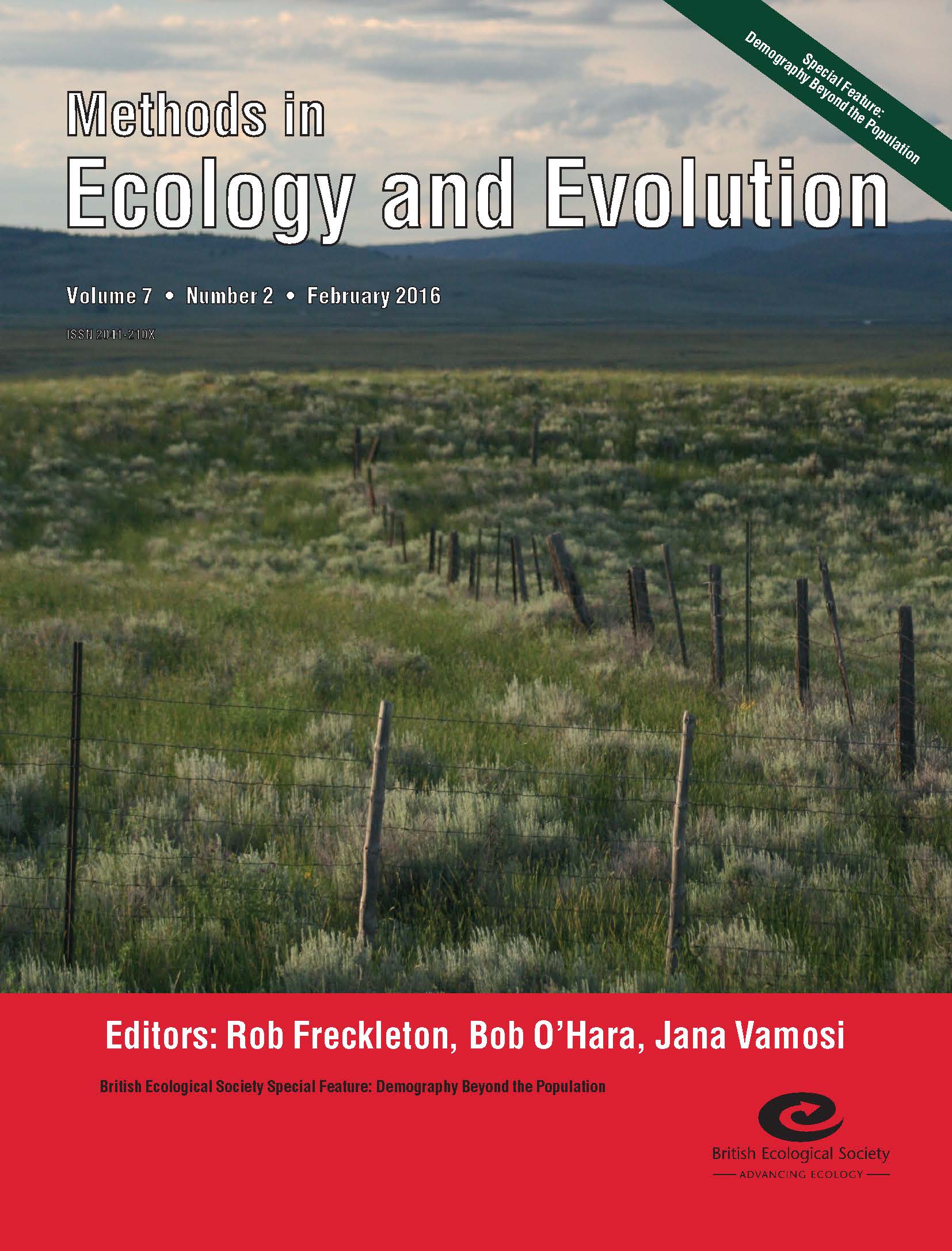
Sagebrush steppe in eastern Idaho, USA
© Brittany J. Teller

The February issue of Methods is now online! As you may have seen already, it includes the BES cross-journal Special Feature: “Demography Beyond the Population“. There are also eight other wonderful articles to read.

We have four articles in the Demography Beyond the Symposium Special Feature. You can read an overview of them by two of the Feature’s Guest Editor Sean McMahon and Jessica Metcalf here (Sean and Jessica are also Associate Editors of Methods).

If you’d like to find out more about each of the individual papers before downloading them, we have blog posts about each one. Daniel Falster and Rich Fitzjohn discuss the development of plant and provide some advice on creating simulation models in Key Technologies Used to Build the plant Package (and Maybe Soon Some Other Big Simulation Models in R). There is a look back at the evolution of Integral Projection Models from Mark Rees and Steve Ellner in How Did We Get Here From There? A Brief History of Evolving Integral Projection Models. In Inverse Modelling and IPMs: Estimating Processes from Incomplete Information Edgar González explains how you can estimate process that you can’t observe. And keep an eye out for Brittany Teller’s blog post coming next week!

Don’t wait too long to get the Demography Beyond the Population Special Feature papers though, they’re freely available for a limited time only

Continue reading “Issue 7.2: Demography Beyond the Population”

Making the Most of Volunteer Data: Counting the birds and more…

Post provided by Rob Robinson

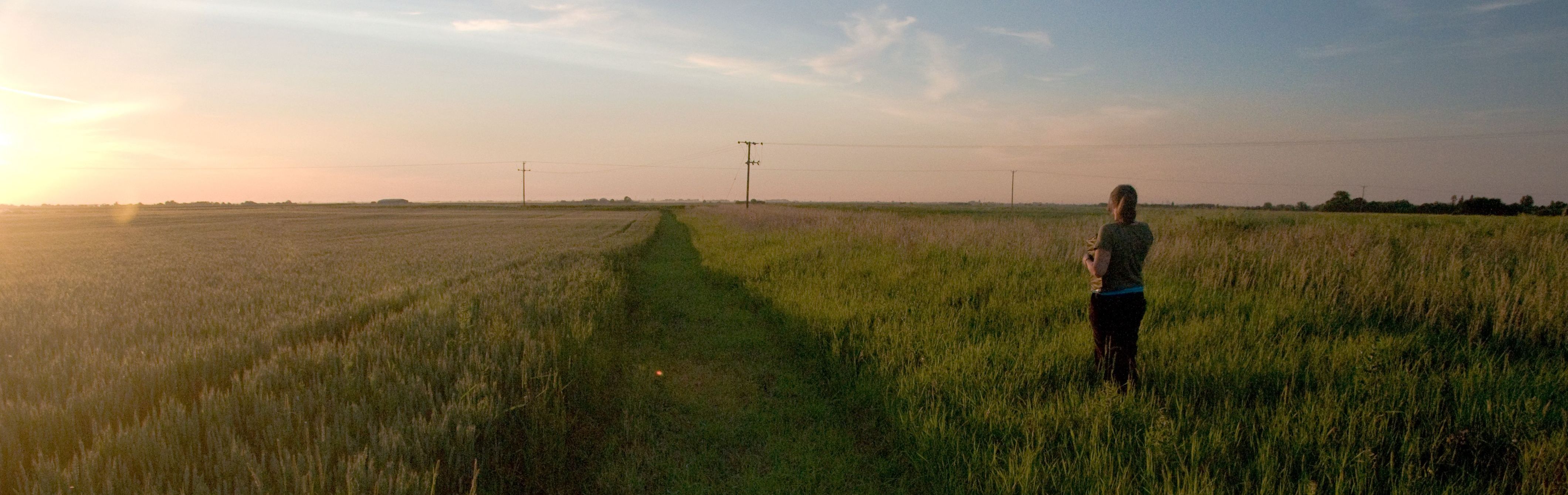
It’s 6am on a warm spring morning and I’m about to visit the second of my Breeding Bird Survey1 sites. Like 2,500 other volunteers in the UK, twice a year I get up early to record all the birds I see or hear on the two transects in my randomly selected 1km square. Each year I look forward to these mornings almost as much for the comparisons as the actual sightings. Will there be more or fewer sightings of our summer migrants this year? How will numbers in this rolling Norfolk farmland stack up against those I see in urban, central Norwich?

Dawn bird survey in arable farmland. © Rob Robinson/BTO
Dawn bird survey in arable farmland. © Rob Robinson/British Trust for Ornithology (BTO)

The importance of demography

But simply recording these changes is not enough; we need to understand why they occur if action is to be taken. This requires us to quantify the demographic rates (survival, productivity and movements) that underlie them, which in turn requires samples of marked individuals. Simply counting individuals is not enough. Continue reading “Making the Most of Volunteer Data: Counting the birds and more…”

Issue 6.9

Issue 6.9 is now online!

The September issue of Methods is now online!

This month’s issue contains one Applications article and two Open Access articles, all of which are freely available.

POPART: An integrated software package that provides a comprehensive implementation of haplotype network methods, phylogeographic visualisation tools and standard statistical tests, together with publication-ready figure production. The package also provides a platform for the implementation and distribution of new network-based methods.

Michalis Vardakis et al. provide this month’s first Open Access article. In ‘Discrete choice modelling of natal dispersal: ‘Choosing’ where to breed from a finite set of available areas‘ the authors show how the dispersal discrete choice model can be used for analysing natal dispersal data in patchy environments given that the natal and the breeding area of the disperser are observed. This model can be used for any species or system that uses some form of discrete breeding location or a certain degree of discretization can be applied.

Our September issue also features articles on Animal Movement, Population Dynamics, Statistical Ecology, Biodiversity, Conservation Biology and much more. Continue reading “Issue 6.9”