One of the base units of analysis for biogeography and conservation science is the species range map. Once we know where a species is, we can ask questions like “Why is it there?”, “How did it get there?”, or “What can we do to make this place better for it?” Especially these days, I am very interested in mapping marine fish distributions, which, it turns out, is not as simple as mapping terrestrial species.
It was a true privilege to be asked to write the inaugural E. C. Pielou Review for Methods in Ecology and Evolution. The first ecology book I bought as an undergraduate was her Ecological Diversity (1975) which still sits on my bookshelf full of marginalia. Both ecology and evolution have long and rich histories of theoretical and empirical work, yet sometimes theory and observation have been only loosely connected. Pielou’s work made it possible to link theory and observation more tightly by providing quantitative, statistical metrics to describe patterns in the world that can be related back to theory.
Post provided by SEEC The Centre for Statistics in Ecology, Environment and Conservation (SEEC) invites you to ISEC2022 in Cape Town, South Africa, 27 June – 1 July 2022 – the first International Statistical Ecology Conference (ISEC) to be held in Africa! Registration is now open and we would like to welcome all of you to join this exciting event. Statistical ecology is an inherently … Continue reading Countdown to the first ISEC in Africa!
Methods in Ecology and Evolution is turning 10 years old! Back in 2010, we launched the journal because of feedback from the community that there was a need for a journal that promoted the publication of new methods. Founding Editor Rob Freckleton and Graziella Iossa (now a member of the Editorial Board) summarised the aims and ambitions for the journal in the first issue. They … Continue reading Ten Years of Methods in Ecology and Evolution
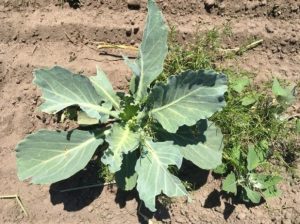
Proportion of leaf damage is a type of measurement that can lead to proportional data.
Imagine the scene: you’re presenting your exciting research results at an important international conference. Being conscientious and aware of statistical best-practice and so you’ve included test statistics and confidence intervals on all your result figures. Not just P values! Some of the data you are presenting involves the proportion of leaf surface damaged by an insect herbivore under different treatments. You finish your presentation (on time!) and there’s time for questions. From the audience a polite but insistent colleague asks: “Your confidence interval for that estimate goes from -0.3 to 0.5… how should we interpret a negative proportion of a leaf?”.
Someone chuckles. As you nervously flick back to the slide in question, you mutter something about the difference between confidence intervals and point estimates. You start to feel dizzy. A murmur of confused voices slowly builds amongst the audience members. In the distance, a dog barks.
Today, we are pleased to be welcoming a new member of the Methods in Ecology and Evolution Associate Editor Board. Res Altwegg joins us from the University of Cape Town, South Africa and you can find out a little more about him below. Res Altwegg “My interests lie at the intersection between ecology and statistics, particularly in demography, population ecology, species range dynamics and community ecology. My work … Continue reading New Associate Editor: Res Altwegg
At the International Statistical Ecology Conference in St Andrews this July (ISEC 2018) David Warton interviewed Olivier Gimenez about R2ucare. R2ucare is an R package for goodness-of-fit tests for capture-recapture models. The full Methods in Ecology and Evolution article on this package – R2ucare: An r package to perform goodness‐of‐fit tests for capture–recapture models – was published in the July 2018 issue of the journal. David and Olivier also discuss some … Continue reading R2ucare: An Interview with Olivier Gimenez
Today is the first day of the Crossing the Palaeontological-Ecological Gap (CPEG) conference. The aim of the conference is to open a dialogue between palaeontologists and ecologists who work on similar questions but across vastly different timescales. This splitting of temporal scales tends to make communication, data integration and synthesis in ecology harder. A lot of this comes from the fact that palaeontologists and ecologists tend to publish in different journals and attend different meetings.



 Methods Blog