Post provided by Liming Cai
Much of the species diversity on Earth is driven by biotic interactions. Ecologists and evolutionary biologists, including myself, strive to characterize these phenomena through careful field observation. However, cryptic underground interactions still largely remain a black box even with long-term surveys.
Luckily, some of these cryptic interactions, such as plant parasitism, leave a unique genetic footprint that allows researchers to infer interactions from DNA sequences directly (while sipping tea in their office) and even reconstruct unknown or extinct ones. This is because plants frequently take up alien DNA from the environment through horizontal gene transfer (HGT).
The plant mitochondrion is especially great material for this purpose. You can find all sorts of junk in it—fungal DNA, selfish transposable elements, plastid DNA, and host plant DNA. However, due to this genomic complexity, there was no good tool to characterize alien DNA across the whole genome or track down the sources of alien DNA.
Texas broomrapes are my favourite puzzle
There was some time between my postdoc in Texas and before I started my faculty job in Florida. I had one year to think about how to build my research profile as a PI and try out ideas that would otherwise require too much time outside my main research projects. I decided to write a program, HGTScanner, that can tackle the difficult problem of characterizing non-native DNA in genomes.
I started testing different approaches using root parasites in the family Orobanchaceae (broomrapes). It is a really wonderful and diverse plant lineage that has attracted a lot of attention in the plant world. Species in this family span from fully photosynthetic plants to non-green ones that rely completely on hosts for water and nutrients. There are both generalists that can attack more than 20 host families and specialists that only grow on one host species.
During my postdoc, I went on a few field trips with the TEX-LL herbaria curator George Yatskievych, who is also an Orobanchaceae enthusiast. We spent a lot of time digging around Austin, Texas to identify the host of an uncommon parasite Aphyllon cooperi (Orobanchaceae). It turns out that Aphyllon cooperi in Austin largely grows on goldeneyes Viguiera (Asteraceae), which differs from its major host ragweeds (Ambrosia, Asteraceae) in California. This tells us that field excursions provide a snapshot of these underground interactions, offering limited information beyond the location and time at which they are observed.
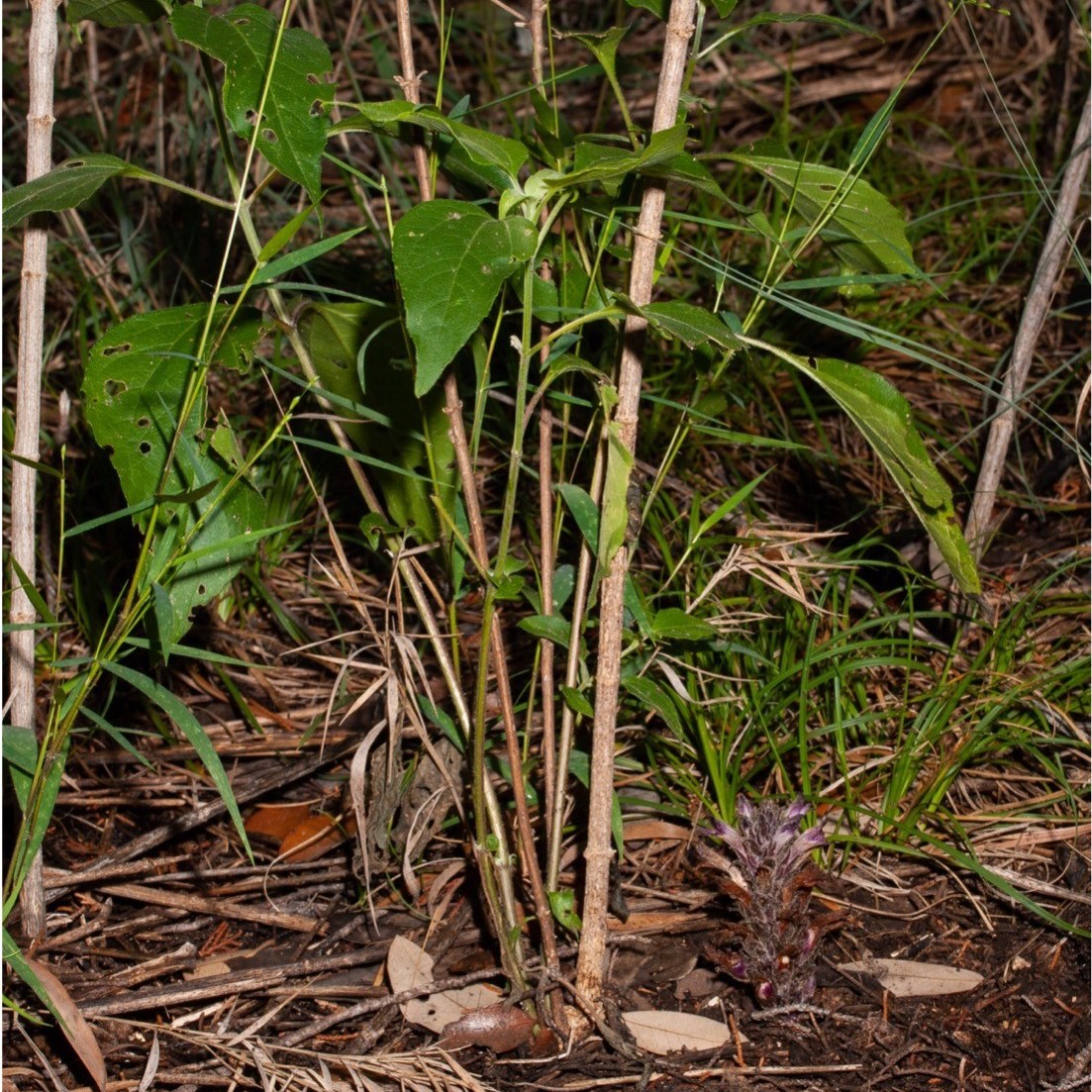
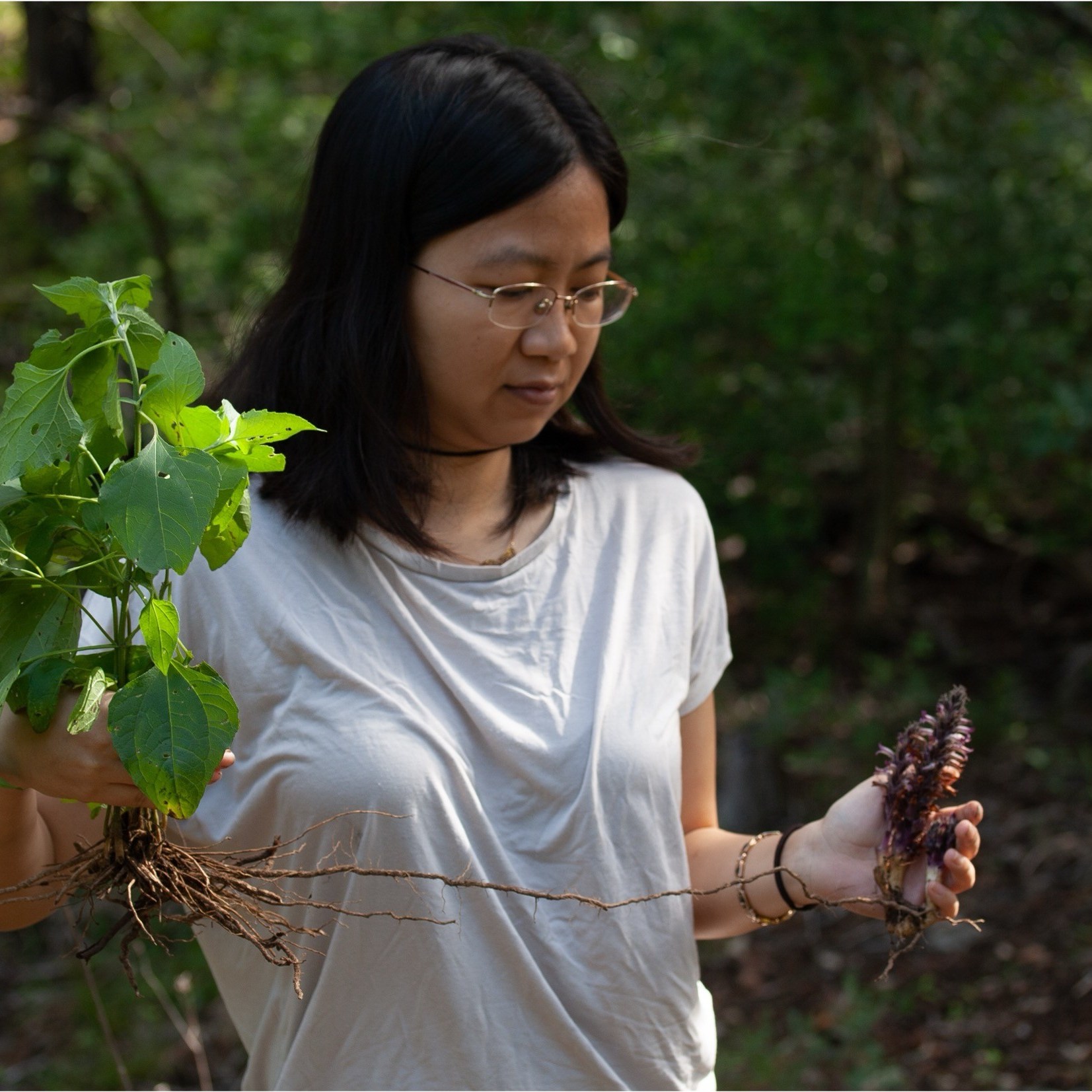
Aphyllon cooperi grown on Viguiera dentata in Austin, Texas, before and after the excursion. Liming holding the host-parasite pair connected by root tissue and haustoria. Photo credit: George Yatskievych.
Yet when we examined the alien DNA in Aphyllon using HGTScanner, we obtained a much fuller picture of its potential host range. The main host Asteraceae contributes more than half of the HGTs, but other plant families, including nightshades (Solanaceae) and roses (Rosaceae), all contributed substantially. A lot of these Solanaceae and Rosaceae HGTs are shared among several closely related Aphyllon species, suggesting a wider host range in their ancestor and a more specialized strategy in modern species.
Amborella is my test of truth
For any newly developed tool like HGTScanner, benchmarking its performance against other established tools is critical. Yet no other HGT tool could handle the rampant genomic shuffling, we thus turned to a hand-curated dataset from Amborella trichopoda. Amborella is the oldest living ancestor and the rockstar of flowering plants. It is a rare bush exclusively found in New Caledonia. Rice et al. (2012) found that Amborella engulfed entire mitochondrial genomes from mosses, green algae, and possibly other flowering plants. We carefully compared the results from HGTScanner with the 147-page supplementary material from Rice et al. (2012). We found that HGTScanner captured 98.2% of previously characterized HGTs from mosses and algae, in just two hours of computer time, instead of 200 hours of manual searching. And thanks to the much expanded GenBank database, we refined the identity of moss and algal donors. It was particularly reassuring to see algal HGTs from Watanabeaceae, a well-recognized photobiont algae of lichens that live on the leaf surface of tropical trees like Amborella.
Yet what is most exciting is the angiosperm-derived HGTs. Amongst all 24,661 candidate species, the top HGT donor is an endemic New Caledonian root parasite Hachettea austrocaledonica. “Wow.” When I first saw this, I gasped out loud. The dots were connected almost too well—not only a New Caledonian native, but also a parasite?! I looked up everything I could find in the library, online, and from digitized specimens to see if there is any note on Amborella being the host of Hachettea. Nothing. There is nothing in writing that connects these two plants together. I was frustrated for a moment—I could not provide a solid second line of evidence (scientists love this) to explain why there is so much Hachettea DNA in Amborella. But then I saw the bright side—Darwin saw the star orchid and predicted a long-tongued pollinator; I had just predicted an “underground” parasitic relationship between two New Caledonian plants, based on several thousand base pairs of dead, alien DNA in their genomes.
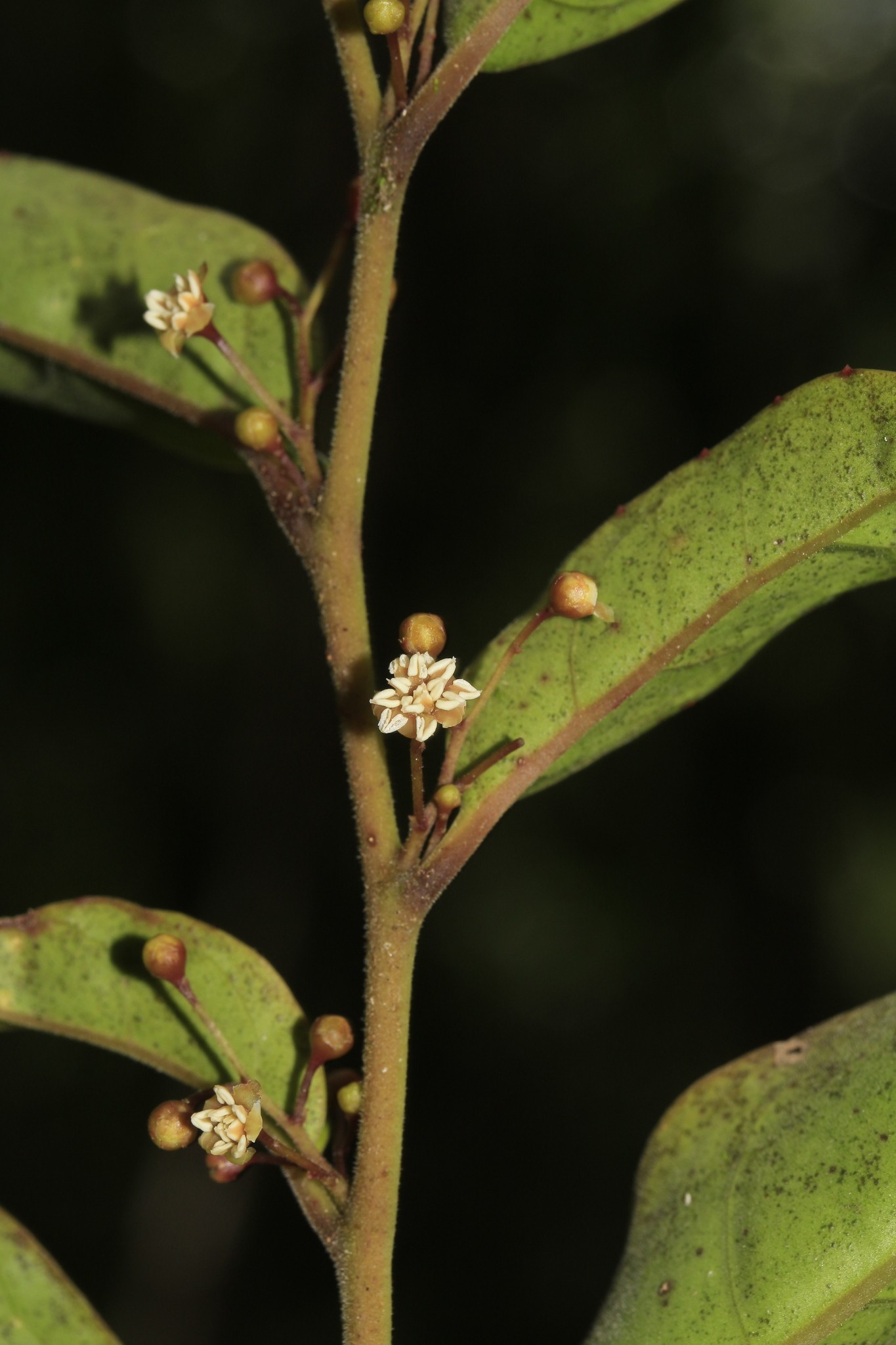
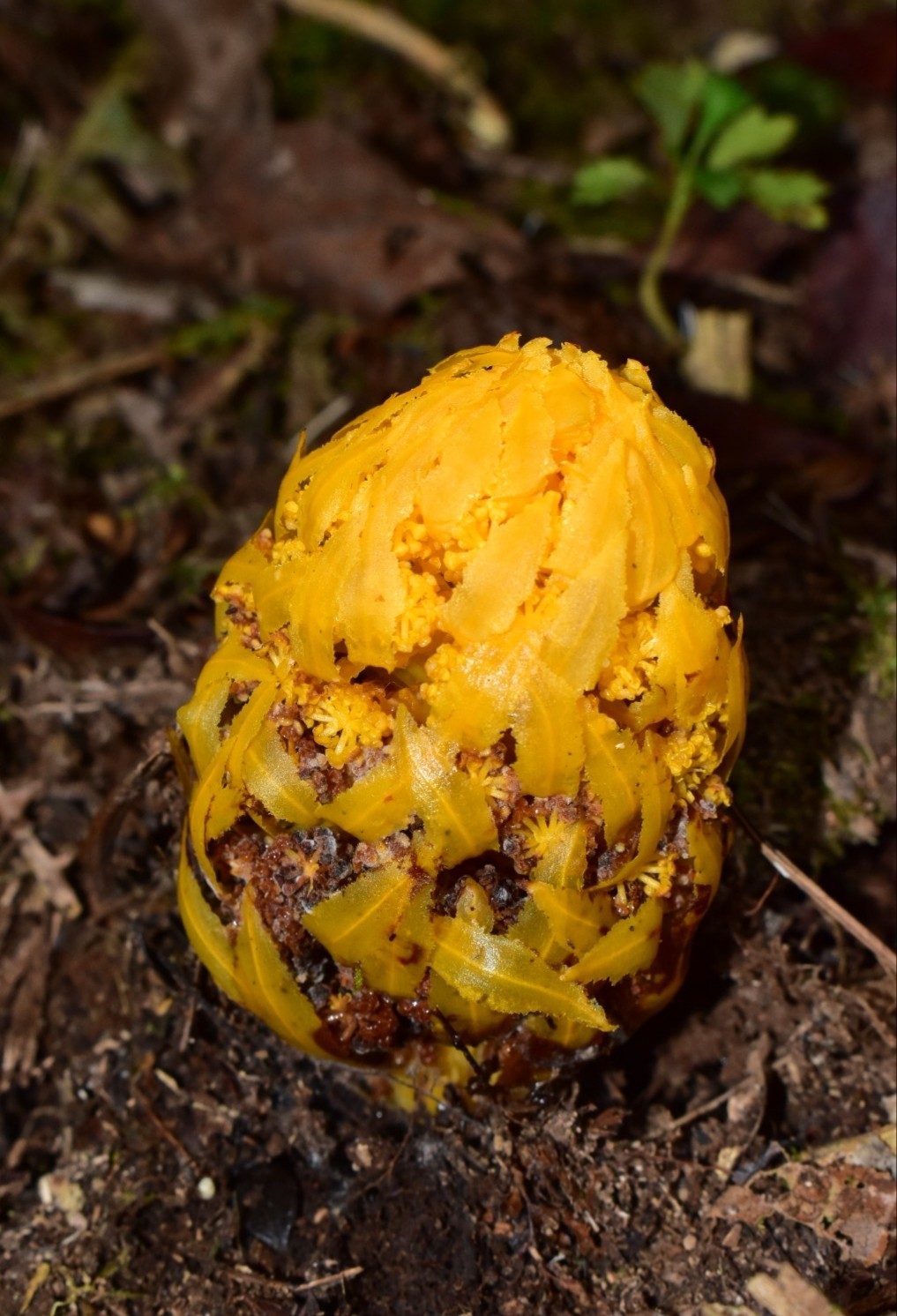
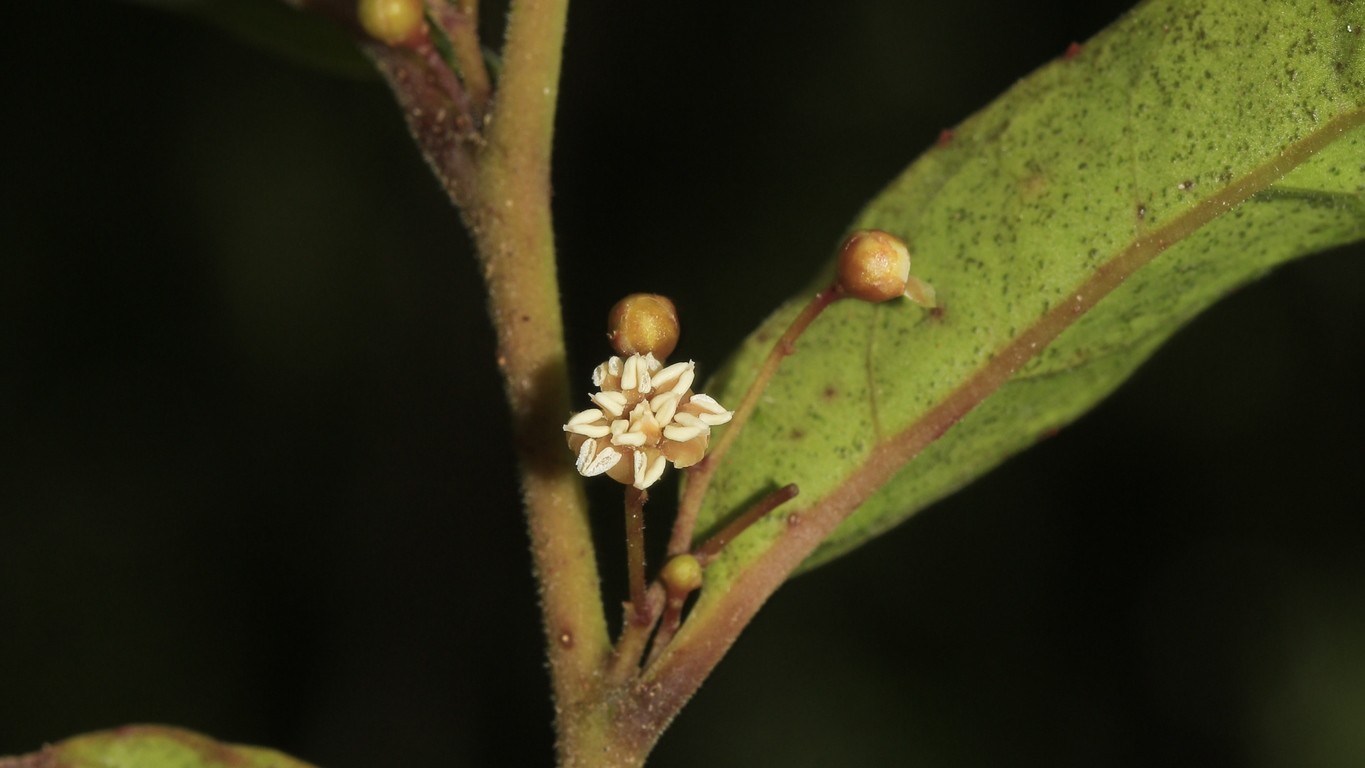
Amborella trichopoda and Hachettea austrocaledonica grown separately, not together. Photo credit: hervevan and Joey Santore (CCBY-NC).
I guess we will find out on my next trip to New Caledonia!
Read the full article here.

