Navigating the data-rich world of aquatic acoustic telemetry

Post provided by Kim Whoriskey

Early Career Researcher Kim Whoriskey takes us behind the Methods paper ‘Current and emerging statistical techniques for aquatic telemetry data: A guide to analysing spatially discrete animal detections’ which led to her being shortlisted for our Robert May Prize in 2019.

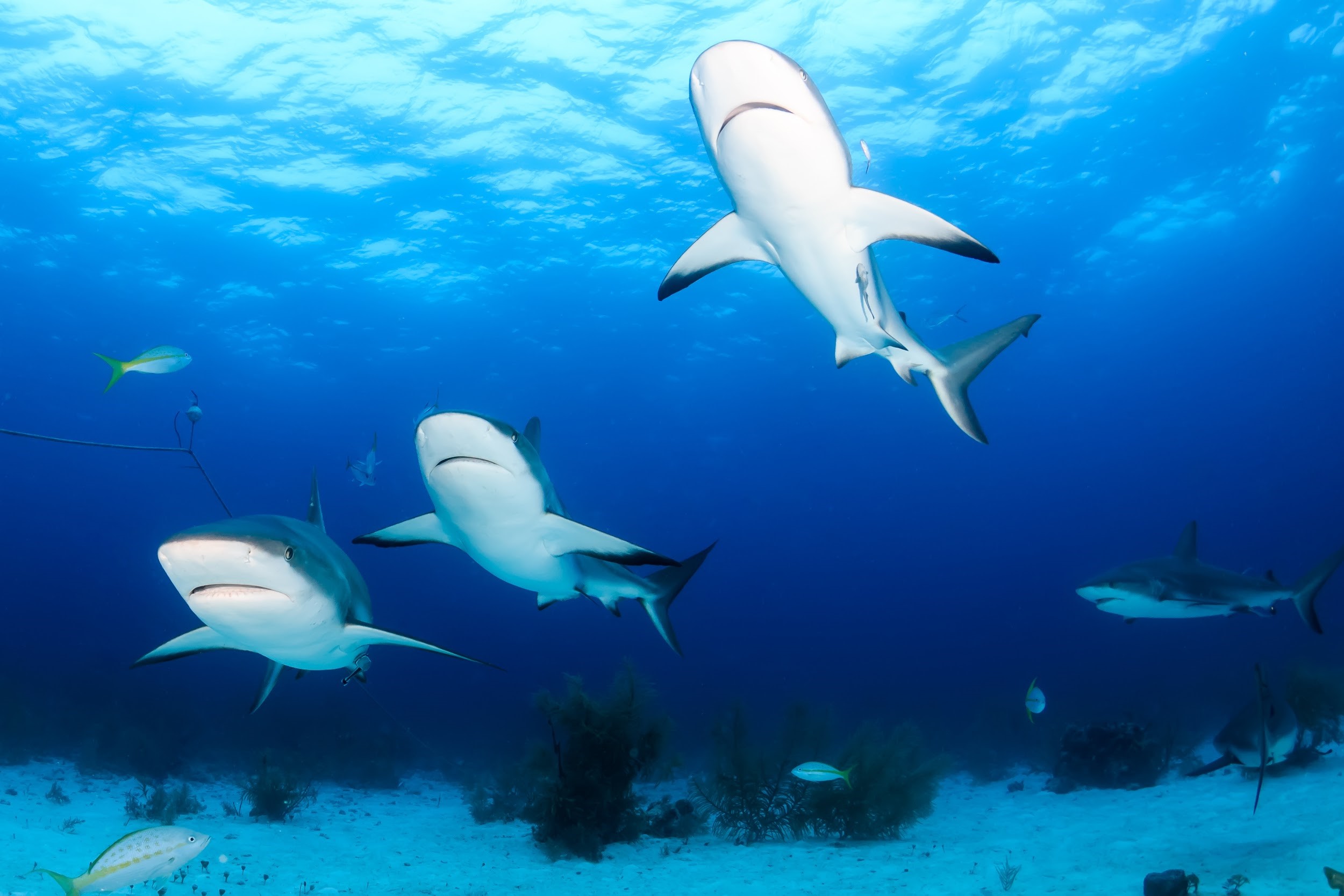
Understanding how aquatic animals move is becoming increasingly important for protecting them. Knowing where they migrate, how long they stay, and what they do when they travel through changing marine environments provides us with key information on movement corridors, habitat hotspots, and changing population distributions. This information can then be used to help manage and conserve many different aquatic species, from developing guidelines for recreational fishing practices to defining marine spatial planning measures.

sharks

Continue reading “Navigating the data-rich world of aquatic acoustic telemetry”

How to Sample Nectar of Flowers at Height

Post provided by Daniela Scaccabarozzi, Tristan Campbell and Kenneth Dods.

Daniela Scaccabarozzi, Tristan Campbell and Kenneth Dods tell us about the logistical challenges of sampling flowers at height and their new ground-based method for overcoming these problems.

Operational maneuvers while using the practical ground-based tool for nectar collection, prior to placing the organza bag over the inflorescence. Picture credit: Tristan Campbell.

Sampling flower nectar from forest canopies is logistically challenging, as it requires physical access to the canopy at a height greater than can be achieved by hand. The most common solutions comprise the use of cherry pickers, cranes or tree climbers, however these techniques are generally expensive, complex to organise, and often involve additional safety risk assessment and specialised technicians.

Continue reading “How to Sample Nectar of Flowers at Height”

Stop, think, and beware of default options

Post provided by Paula Pappalardo (with contributions from Elizabeth Hamman, Jim Bence, Bruce Hungate & Craig Osenberg)

Esta publicación también está disponible en español.

You spent months carefully collecting data from articles addressing your favorite scientific question, you have dozens of articles neatly arranged on a spreadsheet, you found software or code to analyze the data, and then daydream about how your publication will be the most cited in your field while making cool plots. If that sounds familiar, you have probably done a meta-analysis. Meta-analysis uses statistical models to combine data from different publications to answer a specific question.

What you may not have realized when going down the meta-analysis rabbit hole, is that small, seemingly inconsequential, choices can greatly affect your results. If you want to know about one of them lurking behind the scenes… read on!

Continue reading “Stop, think, and beware of default options”

Para, piensa, y ten cuidado con las configuraciones por defecto

Post escrito por Paula Pappalardo (con aportes de Elizabeth Hamman, Jim Bence, Bruce Hungate & Craig Osenberg)

This post is also available in English.

Pasaste meses laboriosamente colectando datos de artículos científicos acerca de tu pregunta favorita, tienes decenas de artículos perfectamente organizados en una base de datos, ya encontraste el programa o código para analizar los datos, y entonces imaginas como tu publicación va a ser la más citada en tu campo de investigación mientras haces unos gráficos lindísimos. Si esto te suena familiar, seguramente has hecho un meta-análisis. Un meta-análisis usa modelos estadísticos para combinar datos de distintas publicaciones para responder a una pregunta específica.

Lo que quizás no te diste cuenta mientras navegabas los pasos del meta-análisis, es que pequeñas decisiones (a veces pareciendo de muy poca importancia) pueden tener grandes efectos en los resultados. Si quieres saber más acerca de una de estas decisiones en particular… ¡sigue leyendo!

Continue reading “Para, piensa, y ten cuidado con las configuraciones por defecto”

Happy 10th Anniversary to us!

This year is our 10th Anniversary! To celebrate, we’ve made a timeline of highlights from the past decade, from the first paper ever submitted, to a top-cited article with 3,295 citations. We’d like to give a big thanks our dedicated editors, plus all the authors and reviewers who are developing the fields of ecology and evolution with groundbreaking new methods. Here’s to 10 more years! Continue reading Happy 10th Anniversary to us!

MInOSSE: all you need to reconstruct past species geographic range is in the fossil record!

Post provided by Francesco Carotenuto

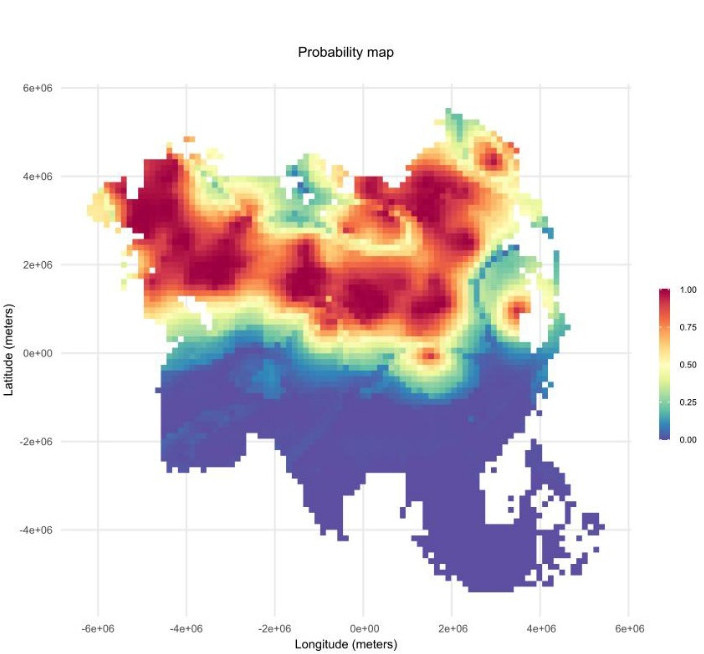
A very important ecological feature of a species is its geographic range, which can be described by its size, position and shape. Studying the geographic range can be useful to understand the ecological needs of a species and, thereby, to plan conservation strategies. In ecological studies, mathematical models are the new standard to reconstruct the distribution of living species on Earth because of their accuracy in predicting a species presence or absence at unsampled locations. These methods are able to reconstruct the climatic niche of a species and to project it onto a geographic domain in order to predict the species’ spatial distribution. To do this, besides the occurrences of a species, the models necessarily require the spatial maps of environmental variables, like temperature and precipitation, for all the study area.

Continue reading “MInOSSE: all you need to reconstruct past species geographic range is in the fossil record!”

Issue 11.7: Biodiversity offsetting, demersal fisheries & decaying logs

The July issue of Methods is now online! Cover JPEG

This month’s issue features articles on evaluating biodiversity offsetting, managing remotely-collected data, quantifying log decay and much more.

Senior Editor Aaron Ellison has selected six featured articles this month – find out about them below. We also have three Applications and seven articles that are freely available to everyone – no subscription required!

Continue reading “Issue 11.7: Biodiversity offsetting, demersal fisheries & decaying logs”

Methodology matters for comparing coarse wood and bark decay rates across tree species

Post provided by Chenhui Chang


落红不是无情物,化作春泥更护花。 –龚自珍(清)
The fallen petals are not as cruel as they seem; they fertilize those in full bloom instead.”Gong Zizhen (Qing Dynasty)

log
A decaying Douglas fir log

This picture shows a decomposing log of Douglas fir, Pseudotsuga menziesii (Mirb.) Franco, in Schovenhorst, The Netherlands, which is one of the deadwood incubation sites of the LOGLIFE “tree cemetery” project. 25 angiosperm and gymnosperm species covering a diverse range of functional traits were selected and incubated in the “common garden experiment”. This project was founded in 2012, aiming to disentangle the effects of different species’ wood traits and site-related environmental drivers on decomposition dynamics of wood, and its associated diversity of microbial and invertebrate communities.

Continue reading “Methodology matters for comparing coarse wood and bark decay rates across tree species”

The tripod frame: mooring acoustic receivers on the seabed

Post provided by Jolien Goossens

Jolien Goossens tells us about the challenges of installing acoustic receivers on the seabed and the tripod they designed to overcome them.

sea

Installing scientific instruments in the marine environment comes with many challenges. Equipment has to withstand the physical forces of tides, currents and storms. Researchers have to take into account the effects of biofouling, corrosion and human activities. Even access to the study site can pose its difficulties, as diving is limited by depth and weather conditions. Practical deployment mechanisms are therefore needed to sustain consistent data flows.

Acoustic telemetry enables the observation of animal movements in aquatic environments. Individual animals are fitted with a transmitter, relaying a signal that can be picked up by acoustic receivers. To facilitate a convenient installation of these instruments, we developed and tested a new design, mounting a receiver with an acoustic release on a tripod frame. This frame enables the recovery of all equipment and better yet, improves the quality of the data.

Continue reading “The tripod frame: mooring acoustic receivers on the seabed”

Methods for Ocean Conservation: World Ocean’s Day 2020

Post provided by Chloe Robinson


Whether you refer to them as the ‘briny deep’, the ‘seven seas’ or ‘Davy Jones’ locker’, the world’s oceans play a huge part in all of our lives. Consisting of 70% of the earth’s surface, oceans driving global weather patterns, through regulating a conveyor belt of heat from the equator to the poles. Oceans are also teeming with life, from single-celled organisms to large apex predators, such as the killer whale (Orcinus orca).

Male killer whale exhaling. Photo credit: Chloe Robinson/Sea Watch Foundation.

As with every other ecosystem on earth, the world’s oceans and the marine life they provide a home to, are under increasing pressure from human-related activities. At the 1992 Earth Summit, Canada proposed the concept of a World Ocean Day as a day to celebrate our oceans and to raise awareness about the crucial role the ocean plays in our lives and the important ways people can help protect it. Since 2002, the Ocean Project has been coordinating and promoting of World Ocean Day.

Continue reading “Methods for Ocean Conservation: World Ocean’s Day 2020”