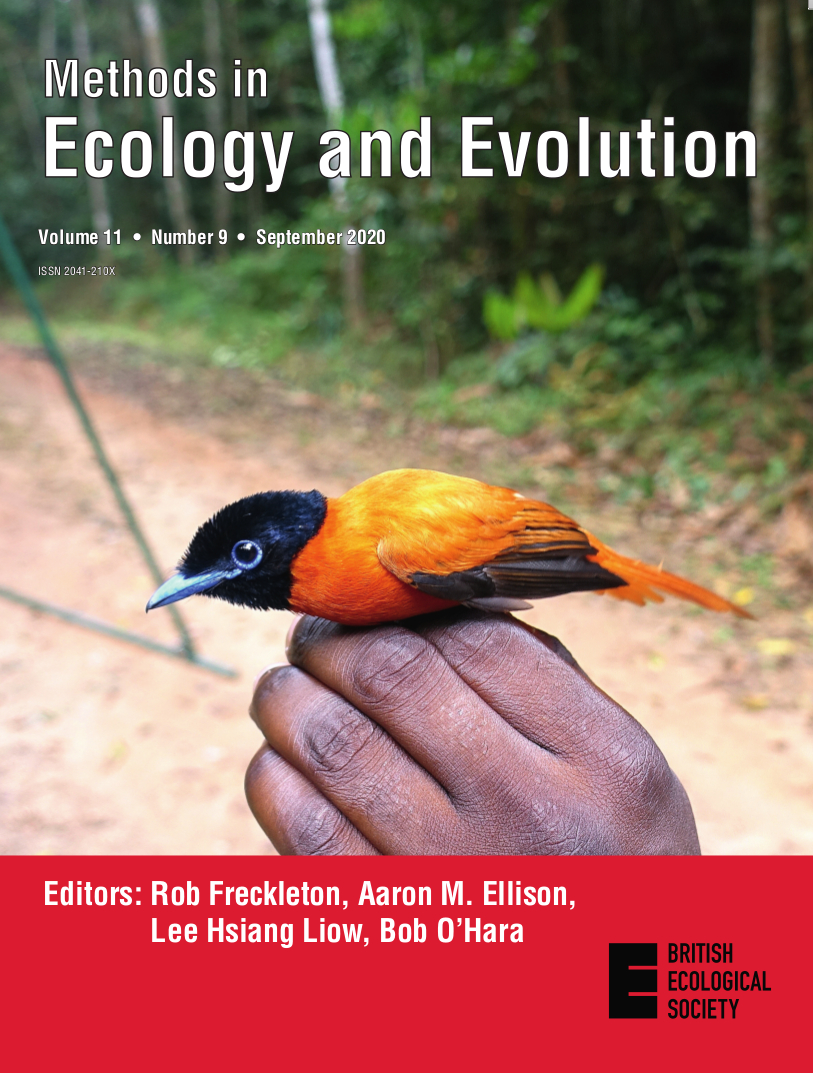
This month’s issue features articles on evaluating biodiversity offsetting, managing remotely-collected data, quantifying log decay and much more.
Senior Editor Aaron Ellison has selected six featured articles this month – find out about them below. We also have three Applications and seven articles that are freely available to everyone – no subscription required!
落红不是无情物,化作春泥更护花。 –龚自珍(清) “The fallen petals are not as cruel as they seem; they fertilize those in full bloom instead.” – Gong Zizhen (Qing Dynasty)
A decaying Douglas fir log
This picture shows a decomposing log of Douglas fir, Pseudotsuga menziesii (Mirb.) Franco, in Schovenhorst, The Netherlands, which is one of the deadwood incubation sites of the LOGLIFE “tree cemetery” project. 25 angiosperm and gymnosperm species covering a diverse range of functional traits were selected and incubated in the “common garden experiment”. This project was founded in 2012, aiming to disentangle the effects of different species’ wood traits and site-related environmental drivers on decomposition dynamics of wood, and its associated diversity of microbial and invertebrate communities.
Jolien Goossens tells us about the challenges of installing acoustic receivers on the seabed and the tripod they designed to overcome them.
Installing scientific instruments in the marine environment comes with many challenges. Equipment has to withstand the physical forces of tides, currents and storms. Researchers have to take into account the effects of biofouling, corrosion and human activities. Even access to the study site can pose its difficulties, as diving is limited by depth and weather conditions. Practical deployment mechanisms are therefore needed to sustain consistent data flows.
Acoustic telemetry enables the observation of animal movements in aquatic environments. Individual animals are fitted with a transmitter, relaying a signal that can be picked up by acoustic receivers. To facilitate a convenient installation of these instruments, we developed and tested a new design, mounting a receiver with an acoustic release on a tripod frame. This frame enables the recovery of all equipment and better yet, improves the quality of the data.
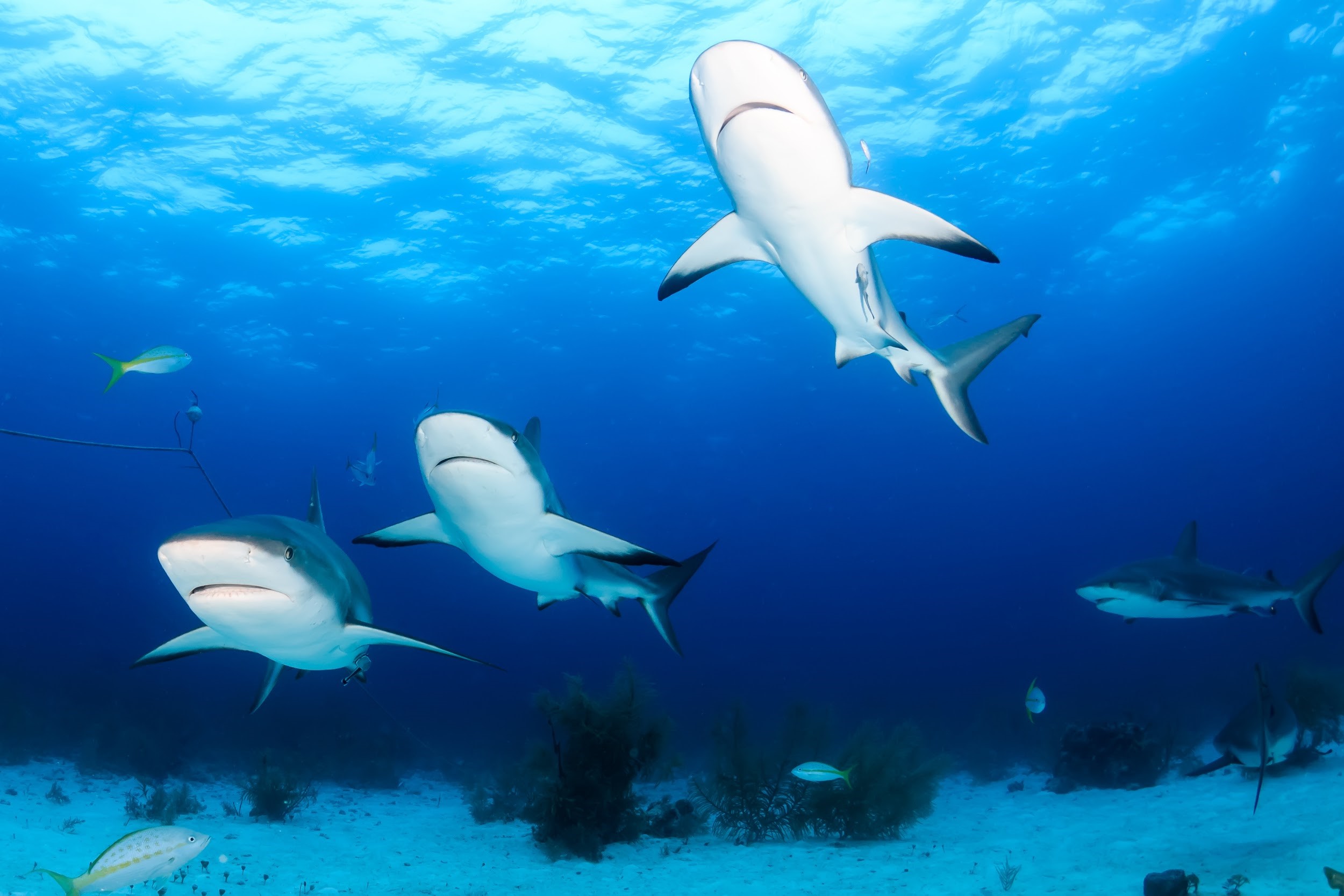
As with every other ecosystem on earth, the world’s oceans and the marine life they provide a home to, are under increasing pressure from human-related activities. At the 1992 Earth Summit, Canada proposed the concept of a World Ocean Day as a day to celebrate our oceans and to raise awareness about the crucial role the ocean plays in our lives and the important ways people can help protect it. Since 2002, the Ocean Project has been coordinating and promoting of World Ocean Day.
In our recent paper in Methods in Ecology and Evolution, Alessandro Lúcio and I describe a new R package, metan, for multi-environment trial analysis. Multi-environment trials are a kind of trial in plant breeding programs where several genotypes are evaluated in a set of environments. Analyzing such data requires the combination of several approaches including data manipulation, visualization and modelling. The latest stable version of metan (v1.5.1) is now on CRAN. So, I want to share the history about my first foray into using R, creating an R package, and submitting a paper to a journal that I’ve never had submitted before.
Em nosso recente artigo na Methods in Ecology and Evolution, Alessandro D. Lúcio e eu descrevemos um novo pacote R para análise de ensaios multi-ambientes chamado metan. Ensaios multi-ambientes são um tipo de ensaio em programas de melhoramento de plantas, onde vários genótipos são avaliados em um conjunto de ambientes. A análise desses dados requer a combinação de várias abordagens, incluindo manipulação, visualização e modelagem de dados. A versão estável mais recente do metan (v1.5.1) está disponível agora no repositório CRAN. Então, pensei em compartilhar a história da minha primeira incursão no uso do R criando um pacote e submetendo um artigo para uma revista que nunca havia submetido antes.
How organisms adapt to the environment they live in is a key question in evolutionary biology. Genetic variation, i.e. how individuals within populations differ from each other in terms of their DNA, is an essential element in the process of adaptation. It can arise through different mechanisms, including DNA mutations, genetic drift, and recombination.
Example of how genetic drift can occur over generations via random sampling (i.e. random mating) in a population. (Picture credit: Gringer).
Differences in DNA sequences between individuals can results in differences in the expression of genes. This can therefore determine the organism’s capacity to grow, develop, and react to environmental stimuli. However, a growing body of literature reveals that there are other ways organisms can change the way they interact with the world without mutations in the DNA sequence.
The demands of a growing human population are putting increasing pressure on the Earth’s natural systems and services. Dubbed the ‘Anthropocene’, we are currently living in a period where human actions are directly altering many earth processes, including atmospheric, geologic, hydrologic and biospheric processes. Climatic change and the resulting consequences, including rising temperatures, changing precipitation (i.e. rainfall, snow etc) and increase in frequency of storm events, represent the biggest challenge to our future and the life-support ecosystems that make our world habitable.
Artist’s interpretation of global climate change. Photo credit: Pete Linforth/Pixabay.
In 1970, Earth Day was launched as a modern environmental movement and a unified response to an environment in crisis. Earth Day has provided a platform for action, resulting in the creation of the Environmental Protection Agency (EPA), The Clean Air, Clean Water and Endangered Species Acts in the US and more globally. This year, 22 April marks the 50th anniversary of Earth Day, and the number one environmental crisis theme which needs immediate attention is ‘Climate Action’. Many of our ecosystems on earth are degrading at an alarming pace and we are currently experiencing a species loss at a rate of tens or hundreds of times faster than in the past.
The latest issue of Methods in Ecology and Evolution is now online! This month’s issue is a little shorter than our last few. But, as they say, good things come in small packages!
Senior Editor Lee Hsiang Liow has selected six Featured Articles this month. You can find out about all of them below. We’ve also got five Applications articles and a Practical Tools article in the April issue that we’re going to cover. Those six papers are freely available to everyone – no subscription required!
There are many reasons that we might be interested in whether individuals, species or populations overlap in multidimensional space. In ecology and evolution, we might be interested in climatic overlap, morphological overlap, phenological or biochemical overlap. We can use analyses of overlap to study resource partitioning, evolutionary histories and palaeoenvironmental conditions, or to inform conservation management and taxonomy. Even these represent only a subset of the possible cases in which we might want to investigate overlap between entities. Databases such as GBIF, TRY and WorldClim make vast amounts of data publicly available for these investigations. However, these studies require complex multivariate data and distilling such data into meaningful conclusions is no walk in the park.