Collecting leaves or seeds from tall trees is a difficult task that many plant physiologists, ecologists, geneticists and forest managers encounter repeatedly. In a series of videos on the Methods in Ecology and Evolution YouTube channel, Kara N. Youngentob, Christina Zdenek and Eva van Gorsel demonstrate how to use the arborist throw-line launcher, which significantly simplifies this task. This new way of collecting seeds and leaves from tall trees is explained in their Applications article ‘A simple and effective method to collect leaves and seeds from tall trees‘. As this is an Applications paper, it is freely available to everyone.
Basic Techniques for the Arborist Throw-line Launcher
The first of the three videos is a basic overview of the method. In this tutorial, the authors teach you how to find the ideal branch, how to use the throw-line launcher and go through some important safety information. Continue reading “The Arborist Throw-line Launcher”
Fish and invertebrates predominantly or exclusively detect particle motion.
A growing number of studies on the behaviour of aquatic animals are revealing the importance of underwater sound, yet these studies typically overlook the component of sound sensed by most species: particle motion. In response, researchers from the Universities of Bristol, Exeter and Leiden and CEFAS have developed a user-friendly introduction to particle motion, explaining how and when it ought to be measured, and provide open-access analytical tools to maximise its uptake. Continue reading “The Overlooked Commotion of Particle Motion in the Ocean”
New clues are helping University of Delaware researchers develop an online map to help Mid-Atlantic fishermen avoid catching Atlantic sturgeon.
Researchers at the University of Delaware are one step closer to developing an online map that would help Mid-Atlantic fishermen avoid catching Atlantic sturgeon.
The research team, led by Matthew J. Oliver, Patricia and Charles Robertson Professor of Marine Science and Policy, found they could make useful predictions about sturgeon locations using satellite measurements of ocean color and temperature. They reported their findings Feb. 3 in the journal Methods in Ecology and Evolution.
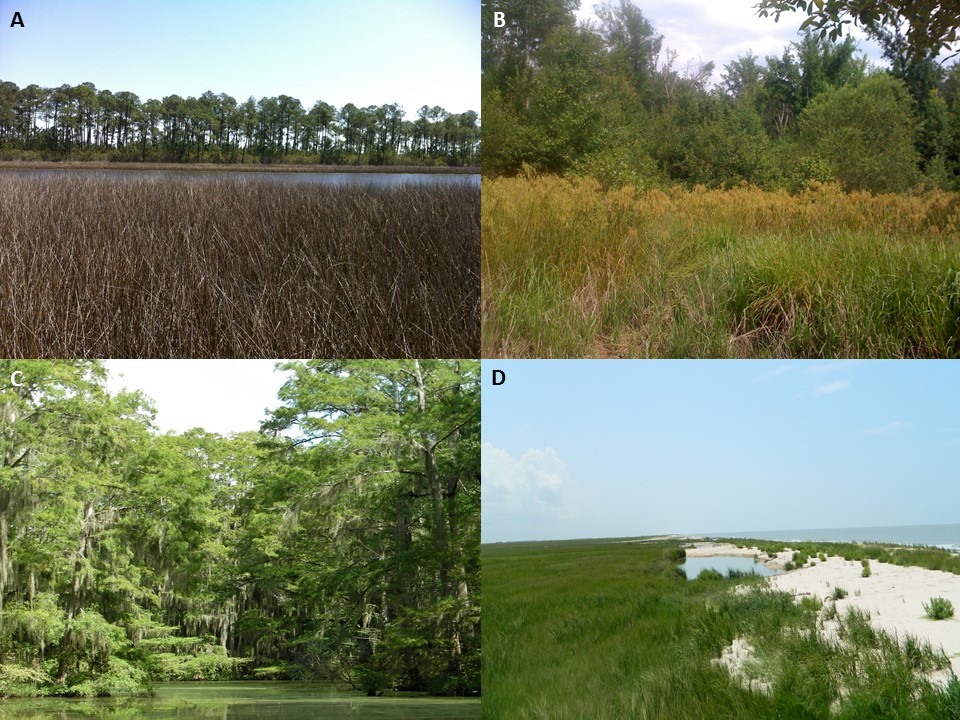
Today is World Wetlands Day, a day to raise awareness about wetlands and the many ecosystem services that they provide. Wetlands are broadly defined as areas saturated or inundated with water for periods long enough to generate anaerobic soils and support water-loving plants. They include bogs, swamps, floodplain forests, marshes and mangroves.
Some may wonder why these habitats deserve their own day of recognition, as wetlands can evoke images of the soggy, unpleasant wild places– the “ghast pools” of Dante’s Divine Comedy or the “waste places” of Beowulf. Unfortunately, these descriptions overshadow the true beauty and value of the world’s diverse wetland ecosystems. For those of us dedicated to researching and enjoying wetlands, these areas are worth appreciating every day of the year for numerous reasons.
In honor of World Wetlands Day, I will make the case for wetlands and highlight an example of a new research tool designed to understand how coastal wetlands may respond to sea-level rise.
Studies of ecosystem function are studies of action: of insects pollinating flowers, of predators killing pests – and in our case (well, more often than not) of beetles disposing of dung. To isolate the effects of the critters that we think will matter, we need to selectively include or exclude them. If we think a particular species or species group is responsible for a certain function, then we test this by keeping it in or out of enclosures. If we want to look at effects of species diversity, then we create communities of different species richness.
Depending on the target organism, this is sometimes easy and sometimes difficult. But it almost invariably proves to be fun! We enjoy the challenge of inventing new techniques for unravelling ecosystem functions sustained by insects. Working on dung beetles – as we tend to do – can be messy, but it’s definitely never boring.
In targeting ecosystem functions, the real trick is to make the experiments relevant. What we want to understand are the effects of changes occurring in the real world. All too often studies of ecosystem functions have been focused on artificial species pools in artificial settings. To see how we have solved this, we’ll give you a quick look at our dungy portfolio of approaches to date. Continue reading “Disentangling Ecosystem Functions: Our Imagination is the Limit”
Isotopes are atoms that have the same number of protons and electrons but differ in their number of neutrons; they are lighter and heavier forms of the same element. Unlike radioactive isotopes, stable isotopes do not decay over time.
Post provided by ALISTAIR HOBDAY (senior principal research scientist, CSIRO Australia), Tim Lynch (senior research scientist, CSIRO, Australia) and Rachael Alderman (wildlife biologist, Tasmanian Department of Primary Industry, Parks, Water and Environment, Australia).
Behavioural and ecological research and monitoring of wildlife populations are based on collection of field data. Demographic data, such as breeding frequency, birth rates and juvenile survival, have been critical in understanding population trends for a wide range of species.
Photography has been extensively used by field biologists and ecologists to gather these data and they have been quick to take up improvements in this technology. Many field programmes today use photography either for primary data collection or the communication of results. Advances in digital photography, image storage and transmission, image processing software and web-based dissemination of images have been extremely rapid in recent years, offering ecologists and biologists a range of powerful tools.
Digital imagery has been captured from a wide range of platforms, each of which has various advantages and limitations for biological study. The most remote images are captured from satellite-based sensors, which have been used to assess population abundance of large animals, such as elephant seals, or locate colonies of emperor penguins. Cameras mounted on aircraft can also provide large-scale perspectives but both of these platforms suffer from high cost, operational limitations due to weather, and limited temporal replication. Recent use of drones, while cheaper, still requires a person to be close to the survey location and can only be used in short bursts, typically lasting less than 20 minutes.
Land-based cameras – or those fixed onto animals – can track behaviour closely, but have low sample size as data tends to be collected at the scale of individual or small groups. To improve replication, fleets of remote cameras can be used or multiple images stitched together post hoc to form a montage. However, this increases cost, either for hardware or labour to manually construct panoramas. To date all these camera systems have had limits to their spatial and/or temporal resolution and, therefore, to the number of individuals covered. This restricts biological study at the population level. Continue reading “High-Res Camera Surveys of Wildlife Colonies: The advantages over traditional approaches”
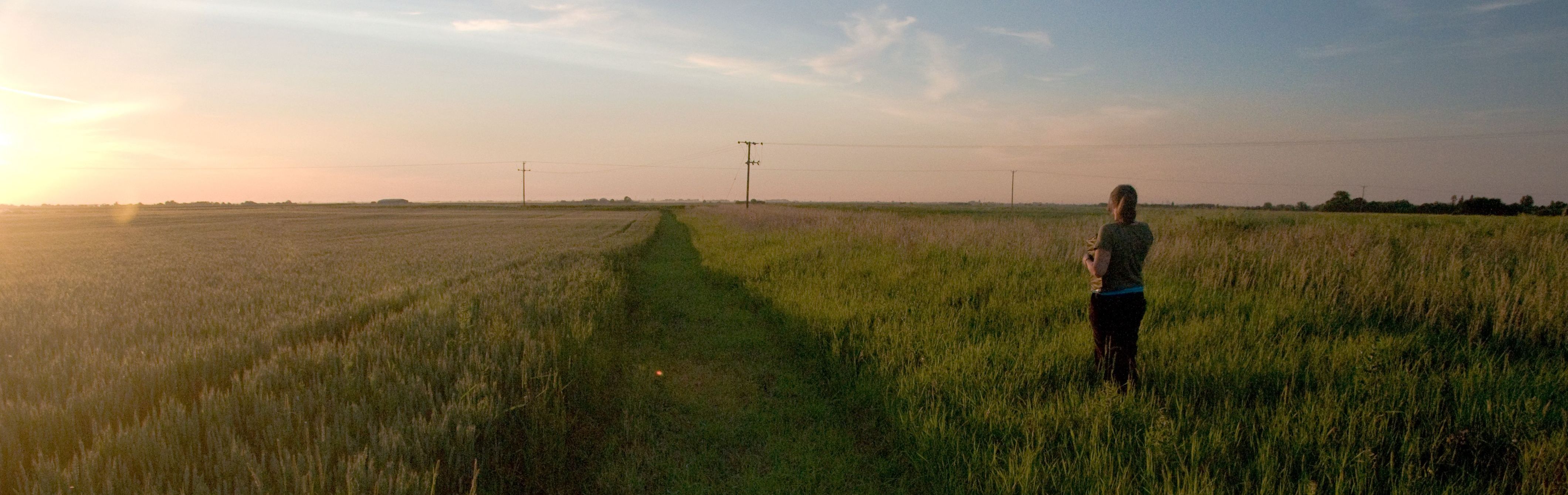
It’s 6am on a warm spring morning and I’m about to visit the second of my Breeding Bird Survey1 sites. Like 2,500 other volunteers in the UK, twice a year I get up early to record all the birds I see or hear on the two transects in my randomly selected 1km square. Each year I look forward to these mornings almost as much for the comparisons as the actual sightings. Will there be more or fewer sightings of our summer migrants this year? How will numbers in this rolling Norfolk farmland stack up against those I see in urban, central Norwich?
But simply recording these changes is not enough; we need to understand why they occur if action is to be taken. This requires us to quantify the demographic rates (survival, productivity and movements) that underlie them, which in turn requires samples of marked individuals. Simply counting individuals is not enough. Continue reading “Making the Most of Volunteer Data: Counting the birds and more…”




 Methods Blog