The Evolution of Love

Post provided by Chloe Robinson

The sending of letters under the pen name ‘St. Valentine’ began back in the middle ages as a way of communicating affection during the practice of courting. Fast forward to 2020 and Valentine’s Day is a day for celebrating romance, but now it typically features the exchange of gifts and cards between lovers.

Credit: Pixabay

Continue reading “The Evolution of Love”

Issue 11.2: Stable Isotopes, in situ Monitoring, Image Analysis and more

The February issue of Methods is now online!

The latest issue of Methods in Ecology and Evolution is now online!

Executive Editor Rob Freckleton has selected six Featured Articles this month. You can find out about all of them below. We’ve also got six Applications articles and five Open Access articles in the February issue – we’ll talk about all of those here too.

On top of all that, the February issue includes articles on population genetics, ecological assemblages, and reconstruction of protein sequences.

Continue reading “Issue 11.2: Stable Isotopes, in situ Monitoring, Image Analysis and more”

Thank You to All of Our Reviewers: Peer Review Week 2019

As many of you will already know, this week is Peer Review Week (16-20 September). Peer Review Week is a global event celebrating the vital work that is done by reviewers in all disciplines. Throughout the week, we’ve been looking back at some of the peer review advice and guidance that we’ve published on the blog. The theme for this year’s Peer Review Week is … Continue reading Thank You to All of Our Reviewers: Peer Review Week 2019

Speeding Up Systematic Reviews: This New Method for Automated Keyword Selection Will Save You Time

Post provided by ELIZA GRAMES

The number of studies published every year in ecology and evolutionary biology has increased rapidly over the past few decades. Each new study contributes more to what we know about a topic, adding nuance and complexity that helps improve our understanding of the natural world. To make sense of this wealth of evidence and get closer to a complete picture of the world, researchers are increasingly turning to systematic review methods as a way to synthesise this information.

What is a Systematic Review?

Systematic reviews, first developed in public health fields, take an experimental design approach to reviewing the literature. They treat the search for primary studies as a transparent and reproducible data gathering process. The rigorous methods used in systematic reviews make them a trusted form of evidence synthesis. Researchers use them to summarise the state of knowledge on a topic and make policy and practice recommendations. Continue reading “Speeding Up Systematic Reviews: This New Method for Automated Keyword Selection Will Save You Time”

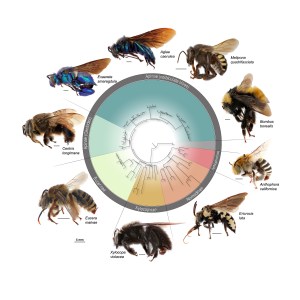
Ultraconserved Elements are Widely Shared across the Tree of Life

Post provided by SILAS BOSSERT

Large-scale phylogenies are increasingly fueled by genomic-data from Ultraconserved Elements. ©Silas Bossert
Large-scale phylogenies are increasingly fuelled by genomic-data from Ultraconserved Elements. ©Silas Bossert

Sequencing ultraconserved DNA for phylogenetic research is a hot topic in evolution right now. As the name implies, Ultraconserved Elements (UCEs) are regions of the genome that are nearly identical among distantly related organisms. They can provide useful information for difficult phylogenetic questions. The list of advantages is long – among others, UCEs are:

A key reason for the method’s success is the developers’ commitment to full transparency, active tutoring, and willingness to help next-gen sequencing newbies like me to get started. Help is just a github-issue post away.

It took little to convince me that I wanted to use UCEs to reconstruct the phylogeny of one of my favourite groups of bees. I eventually met that objective but it won’t be part of this post. This blog post is about the journey to get there—the background story to the article ‘On the universality of target‐enrichment baits for phylogenomic research’. Continue reading “Ultraconserved Elements are Widely Shared across the Tree of Life”

Editor Recommendation: Quantitative Evolutionary Patterns in Bipartite Networks

Post provided by ROB FRECKLETON

The study of interactions and their impacts on communities is a fundamental part of ecology. Much work has been done on measuring the interactions between species and their impacts on relative abundances of species. Progress has been made in understanding of the interactions at the ecological level, but we know that co-evolution is important in shaping the structure of communities in terms of the species that live there and their characteristics. Continue reading “Editor Recommendation: Quantitative Evolutionary Patterns in Bipartite Networks”

2018 Robert May Prize Winner: Laura Russo

The Robert May Prize is awarded annually for the best paper published in Methods in Ecology and Evolution by an Early Career Researcher. We’re delighted to announce that the 2018 winner is Laura Russo, for her article ‘Quantitative evolutionary patterns in bipartite networks: Vicariance, phylogenetic tracking or diffuse co‐evolution?‘.

Plant-pollinator interactions are often considered to be the textbook example of co-evolution. But specialised interactions between plants and pollinators are the exception, not the rule. Plants tend to be visited by many different putative pollinator species, and pollinating insects tend to visit many plant hosts. This means that diffuse co-evolution is a much more likely driver of speciation in these communities. So, the standard phylogenetic methods for evaluating co-evolution aren’t applicable in most plant-pollinator interactions. Also, many plant-pollinator communities involve insect species for which we do not yet have fully resolved phylogenies. Continue reading “2018 Robert May Prize Winner: Laura Russo”

Phylogenetic Tip Rates: How Well Can We Estimate Diversification?

Post provided by Pascal Title and Dan Rabosky

Analyzing diversification rate heterogeneity across phylogenies allows us to explore all manner of questions, including why Australia has such an incredible diversity of lizards and snakes.

Within the tree of life there are differences in speciation and extinction rates over time and across lineages. Biologists have long been interested in how speciation rates change as a function of ecological opportunity or whether key innovations lead to increases in the rate of speciation. Exploring this rate variation and examining how clades differ in terms of their diversification dynamics can help us to understand why species diversity varies so dramatically in time and space. Learning more about the relationship between traits and diversification rates is especially important because it has the potential to reveal the causes of pervasive variation in species richness among clades and across geographic regions.

Several different classes of methods are available for studying the effects of species traits on lineage diversification rates. These include state-dependent diversification models (e.g., BiSSE, QuaSSE, HiSSE) and several non-model-based approaches. In our article – ‘Tip rates, phylogenies and diversification: What are we estimating, and how good are the estimates?’ – we assessed the accuracy of a number of model-free metrics (the DR statistic, node density metric, inverse of terminal branch lengths) and model-based approaches (Bayesian Analysis of Macroevolutionary Mixtures, BAMM) to determine how they perform under a variety of different types of rate heterogeneity. The “tip rates” using these approaches have become widely used for a few reasons, including ease of computation and how easy it is to pair them with other types of data. Continue reading “Phylogenetic Tip Rates: How Well Can We Estimate Diversification?”

R-Ladies: For More Balance in the R Community!

The theme for this year’s International Women’s Day is #BalanceForBetter. So, we decided that we’d like to take this opportunity to promote an organisation that supports and empowers women and gender minorities in STEM fields that still suffer from underrepresentation. As a journal, we publish a lot of articles on software and code that are used in the study of different fields in ecology and evolutionary biology. We have a wide audience of R coders and R users who follow us on social media and read our blog. With that in mind, R-Ladies seemed like a fairly obvious group for us to promote…

Post provided by MAËLLE SALMON and HANNAH FRICK, two members of the R-LADIES GLOBAL TEAM.

What is R-Ladies?

R-Ladies is a global grassroots organisation whose aim is to promote gender diversity in the R community. The R community suffers from an underrepresentation of gender minorities (including but not limited to cis/trans women, trans men, non-binary, genderqueer, agender). This can be seen in every role and area of participation: leaders, package developers, conference speakers, conference participants, educators, users (see recent stats). What a waste of talent!

As a diversity initiative, the mission of R-Ladies is to achieve proportionate representation by encouraging, inspiring, and empowering people of genders currently underrepresented in the R community. So our primary focus is on supporting minority gender R enthusiasts to achieve their programming potential. We’re doing this by building a collaborative global network of R leaders, mentors, learners, and developers to help and encourage individual and collective progress worldwide. Continue reading “R-Ladies: For More Balance in the R Community!”