In this series, we explore the unique experiences of field ecologists conducting research in remote field stations during the holiday season. Through personal stories and reflections, our contributors share what it’s like to conduct scientific work in remote, biodiverse environments, where the challenges of research intersect with the spirit of the holidays. From the solitude of secluded field stations to unexpected festive moments in the … Continue reading A Remote Holiday Season: Research and Reflections at the Succulent Karoo Station.
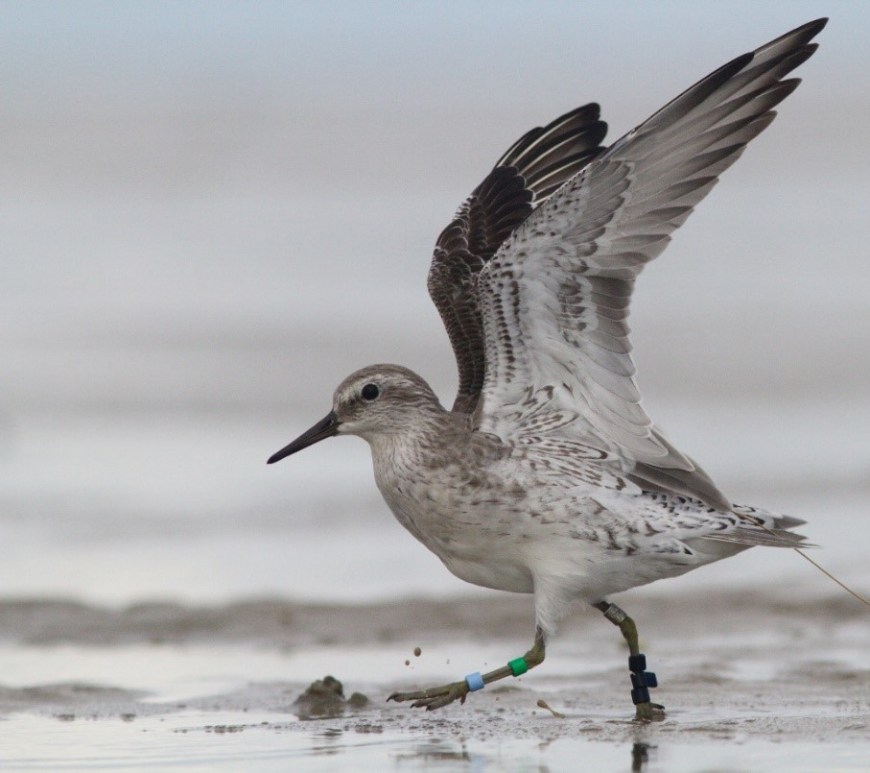
Post provided by Michaël Beaulieu A cold Encounter in the Wild When talking about animal welfare to scientists who commonly use biologging tools to monitor the behaviour or physiology of wild animals in an ecological or conservation context, I have noticed that the first thing that usually comes to mind for them is the unwanted impact that biologging may have on animal welfare. Much has … Continue reading For worse and for better: the complicated marriage between biologging and wild animal welfare
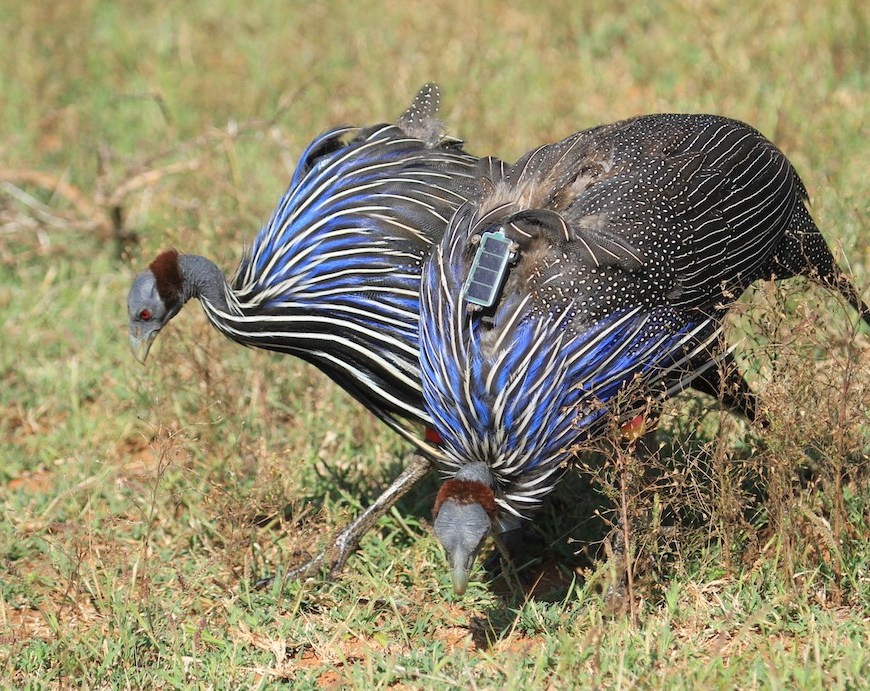
Miniaturisation of technology has made GPS tags increasingly accessible for studying animal behaviour. However, limitations in battery life introduces challenging trade-offs in data collection. In this blog post, Charlotte Christensen and Damien Farine discuss how these sampling trade-offs can impact studies that use GPS tags to study social animals.
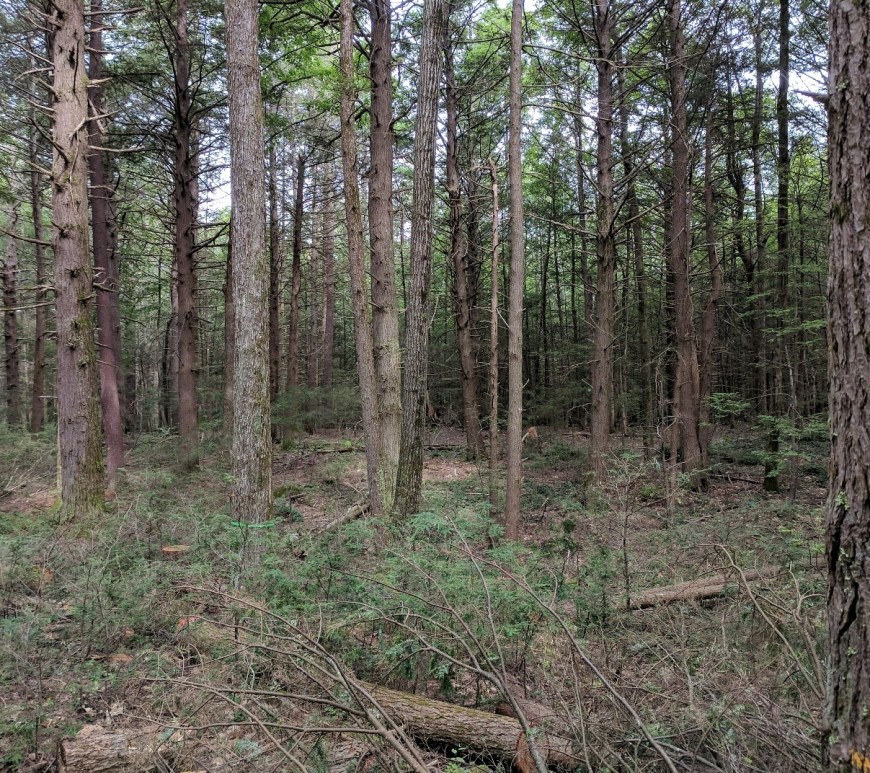
Ecological researchers have adopted light detection and ranging (LiDAR) as a means of quantifying ecosystem structure over the past 25+ years. This is especially true in forest-related research, as LiDAR provides the ability to estimate ecosystem structure with incredibly fine detail, over broad areas. LiDAR can work at the scale of individual trees—for example crown delineation algorithms that identify singular tree canopies—or the stand-level with aggregate structural metrics. In this blog post, Jeff shares insight from he and his co-author’s recent publication “Scale dependency of LiDAR-derived forest structural diversity,” which proposes that using LiDAR requires statistical reassessment to ensure we are measuring what we think we are.
Tracking the movement of animals is important for informing conservation practices but can present logistical obstacles, especially when attempting to track smaller species with large GPS tags. Using existing technologies in new ways may help overcome these obstacles and provide alternative approaches for accurately tracking large numbers of relatively small sized species. In this blog post, Christine Beardsworth discusses findings from her recent Methods in Ecology and Evolution paper “Validating ATLAS: a regional-scale, high-throughput tracking system”.
Daniela Scaccabarozzi, Tristan Campbell and Kenneth Dods tell us about the logistical challenges of sampling flowers at height and their new ground-based method for overcoming these problems.
Operational maneuvers while using the practical ground-based tool for nectar collection, prior to placing the organza bag over the inflorescence. Picture credit: Tristan Campbell.
Sampling flower nectar from forest canopies is logistically challenging, as it requires physical access to the canopy at a height greater than can be achieved by hand. The most common solutions comprise the use of cherry pickers, cranes or tree climbers, however these techniques are generally expensive, complex to organise, and often involve additional safety risk assessment and specialised technicians.
There’s a frustrating yin and yang to biological research: motivated by curiosity and imagination, we often find ourselves instead defined by limitations. Some of these are fundamental human conditions. The spectrum of light detectable by human eyes, for example, means we can never see a flower the way a bee sees it. Others limitations, like funding and time, are realities of modern-day social and economic systems.
Early career researchers (ECRs) starting new projects and delving into new research systems must be especially creative to overcome the odds. Large grants can be transformative, giving a research group the equipment and resources to complete a study, but they’re tough to get. Inexperienced ECRs are at a disadvantage when competing against battle-hardened investigators with years of grant writing experience. Small grants of up to about $5000 USD, on the other hand, are comparatively easy to find. So, how can ECRs make the most of small, intermittent sources of funding?
Today, we’re pleased to announce that we’re launching a new article type for Methods in Ecology and Evolution: Practical Tools. Like our Applications articles, Practical Tools will be short papers(up to 3000 words). They’ll focus on new field techniques, equipment or lab protocols. From this point forward, our Applications papers will solely focus on software and code.
Practical tools need to clearly demonstrate how tools designed for specific systems or problems can be adapted for more general use. Online supporting information can include specific instructions, especially for building equipment. You can find some examples of Applications that would now fit into this article type here and here.





 Methods Blog