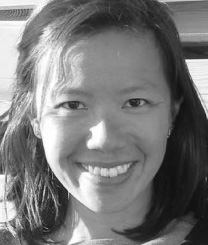
Today we are welcoming two new Associate Editors to Methods in Ecology and Evolution: Samantha Price (University of California, Davis, USA) and Andrés Baselga (University of Santiago de Compostela, Spain). Samantha Price “My research seeks to answer the question ‘What regulates biodiversity?’. I use phylogenetic and comparative methods to investigate the abiotic and biotic drivers of global patterns of ecomorphological and lineage diversity over long periods of time and across … Continue reading New Associate Editors
Post provided by EMILIE AIMÉ, Managing Editor, Methods in Ecology and Evolution This year’s annual ESA meeting is fast approaching. It’s in Fort Lauderdale, Florida and I’ll be heading across the pond, along with Catherine Hill, our Head of Publications, and Hazel Norman, our Executive Director, to chat to delegates about Methods in Ecology and Evolution, as well as our other journals and the British … Continue reading Meet the Team at ESA 2016
Our 5th Anniversary Special Feature is a collection of six articles (plus an Editorial from Executive Editor Rob Freckleton) that highlights the breadth and depth of topics covered by the journal so far. It grew out of our 5th Anniversary Symposium – a joint event held in London, UK and Calgary, Canada and live-streamed around the world in April 2015 – and contains papers by Associate Editors, a former Robert May prize winner and regular contributors to the journal.
The six articles are based on talks given at last May’s Symposium. They focus on:
In his Editorial for the Special Feature, Rob Freckleton looks to the future. In his words: “we hope to continue to publish a wide range of papers on as diverse a range of topics as possible, exemplified by the diversity of the papers in this feature”.
If you are attending Evolution, as well as attending the fabulous talks mentioned by Hélène below, do stop by booth 125 to see our BES colleague Simon Hoggart. Simon is the Assistant Editor of Journal of Animal Ecology and would be happy to answer your questions about any of our journals or any of the other work we do here at the BES.
RPANDA: a time machine for evolutionary biologists
Imagine “Doc”, Marty’s friend in Back to the Future, trying to travel back millions of years in an attempt to understand the history of life. Instead of building a time machine from a DeLorean sports car powered by plutonium, he could dig fossils, or more likely, he would use molecular phylogenies.
Molecular phylogenies are family trees of species that can be built from data collected today: the genes (molecules) of present-day species (Fig 1). They are often thought of as trees, in reference to Darwin’s tree of life. The leaves represent the present: species that can be found on Earth today. The branches represent the past: ancestral species, which from time to time split, giving rise to two independent species. The structure of the tree tells us which species descend from which ancestors, and when their divergence happened.
Fig 1: The phylogenetic tree of all birds (adapted from Jetz et al. 2012). Each bird order is represented by a single bird silloutter and a specific colour (the most abundant order of Passeriformes, for example is represented in dark orange). Each terminal leaf represents a present-day bird species, while internal branches represent the evolutionary relationships among these species.
The annual flagellation of scientist is here – we all know the impact factor is awful, but some people still think it is important. So, here is ours… 6.344
Once more, it is a number with three decimal places. Continue reading “The MEE 2015 Impact Factor”
Today, we are pleased to be welcoming a new member of the Methods in Ecology and Evolution Associate Editor Board. Will Pearse joins us from McGill University in Canada and you can find out a little more about him below. Will Pearse “I am an evolutionary ecologist and use phylogeny to link the evolution of species’ traits with their ecological community assembly. I’m interested in phylogenetic methods, macro-evolution of species’ traits, community assembly … Continue reading New Associate Editor: Will Pearse
Formatting manuscripts for submission can take a long time.
Formatting a manuscript for journal submission can be time-consuming and frustrating work, especially for the first version. To make things a little bit simpler for our authors, we now have just a few small formatting requirements for initial submissions.
To have a paper considered in Methods in Ecology and Evolution it just needs to:
Be double line spaced and in a single column
Be within the word count (6000-7000 words for Standard Articles, 3000 words for Applications)
Follow the standard manuscript structure: Author details, Abstract (must be numbered according to journal style), Keywords, Introduction, Materials and Methods, Results, Discussion
This means that you do not need to worry about the format of your references, the placement of your figures (they can be within the text, at the end of the document or uploaded as separate files), whether or not you have used scientific names or anything else like that. Continue reading “New Initial Submission Requirements”
With impact being considered more and more in promotion applications and REF-style (Research Excellence Framework) exercises, science communication is becoming an integral part of a scientist’s job. The problem is: most of us academics aren’t exactly trained in science outreach and our communication styles are heavily biased towards anything written, as opposed to anything visual.
With technological advancements constantly making things easier, however, more and more scientists are taking the plunge and adventuring into the world of YouTube and Vimeo to disseminate their work. But why are they doing so? Is it easy? Do you need expert help or can you do it yourself easily?
This blog post aims to answer all the questions and worries you may have as a scientist thinking of making a video about your work for the first time. To address these worries and questions in the most comprehensive way, we asked 12 authors who recently produced a video about their paper (in some cases their first) if they could give us some insights on their experience, and detail for us the challenges and benefits of choosing this style of communication. Their stories are the background to our story. Continue reading “A Video is Worth a Million Words: Why You Should Make a Video about YOUR Article”
“‘Why is this plant growing here?’ Tackling this question has led me through wetlands, forests, deserts and grasslands. I’ve poked at this question from the scale of plant traits all the way up to satellite imagery. I employ tools that include multivariate analysis, community and landscape diversity metrics, simulation modelling, and spatial classification. My current focus is on agricultural decision support tools for pasture and rangeland.”
Sarah will be handling Applications articles for the journal. Applications papers describe new software, equipment or other practical tools, with the intention of promoting and maximising the uptake of these new approaches. All of our published Applications articles are freely available to everyone. Continue reading “New Associate Editor: Sarah Goslee”
“If the reviewer doesn’t get it, you haven’t explained it clearly enough!” This is one quote from my PhD supervisor that I haven’t forgotten. Getting research funded and published depends to a very large extent on our ability to get the point across. Although scientific texts appear to differ wildly from other forms of writing, a good research paper actually follows the same basic principles of effective communication as a newspaper article or advertising text.
There are some fairly simple guidelines on presenting and structuring written information to get the point across and highlight the key messages that are very useful for manuscripts, thesis chapters, proposals, basically any kind of academic writing. At Functional Ecology, we’ve collected tips and tricks from various sources to help authors effectively communicate their research and ideas. Here are our key points:
The central principle for any type of communication is: know your audience. A research paper isn’t just about presenting information – it’s about communicating your research to others. When you start preparing a manuscript, you need to think about who will read it. In the first instance, this is probably a busy editor or reviewer, so you should make sure that you get your key messages across without making your readers work too hard. Good science writing isn’t about using clever-sounding words and sentences, it’s about getting the point across in such a way that readers can understand the research and reach the right conclusion (i.e. the one you want them to reach). Continue reading “Writing Manuscripts: The Alternative ‘Guide to Authors’”