2019 Robert May Prize Winner: Corneile Minnaar
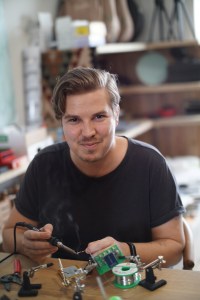
The Robert May Prize is awarded annually for the best paper published in Methods in Ecology and Evolution by an Early Career Researcher. We’re delighted to announce that the 2019 winner is Corneile Minnaar, for his article ‘Using quantum dots as pollen labels to track the fates of individual pollen grains‘.

A central component of an organism’s fitness is its ability to successfully reproduce. This includes finding a potential mate and successful mating. For plants, movement of pollen from an anther to a conspecific stigma is essential for successful reproduction, but directly tracking movement of individual pollen grains heretofore has been impossible (with the exception of those species of orchids and milkweeds whose pollen comes in large packages (pollinia)). Knowing how pollen move around, whether or not they successfully fertilize ovules, is also central to understanding the evolution and ecology of flowering plants (angiosperms) and floral traits.

Continue reading “2019 Robert May Prize Winner: Corneile Minnaar”
O Problema com os ‘Fósseis Vivos’: Uma Perspectiva Filogenética Molecular

Blog escrito por: gustavo burin

This post is also available in English

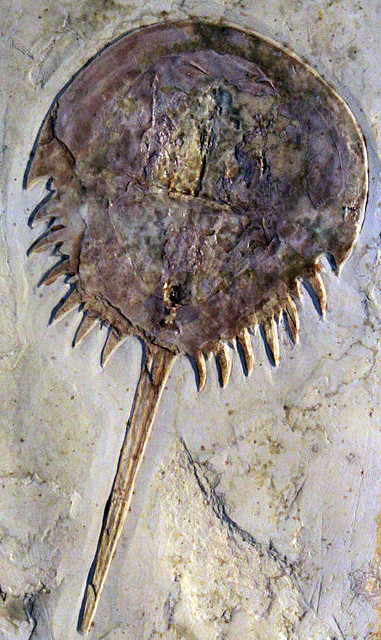
Fóssil de caranguejo-ferradura (Museu de História Natural de Berlin)

Há alguns dias, me deparei com um interessante vídeo sobre os chamados “fósseis vivos”. O vídeo focou mais nos problemas de usá-los como argumentos contra a teoria da evolução, e aproveitei a oportunidade para falar mais sobre essas linhagens longevas.

Fóssil vivo‘ é um termo usado para descrever linhagens que acredita-se terem se originado há muito tempo e que mantêm características que se assemelham a seus parentes fósseis. Alguns exemplos bem conhecidos dessas linhagens são os Tuatara da Nova Zelândia (Sphenodon punctatus) e as árvores Gingkos (Gingko biloba).

Continue reading “O Problema com os ‘Fósseis Vivos’: Uma Perspectiva Filogenética Molecular”

The Problem with ‘Living Fossils’: A Molecular Phylogenetic Perspective

post provided by: gustavo burin

Este post também pode ser lido em Português

Fossil of a Horseshoe crab (Museum of Natural History Berlin)

A couple of days ago I came across a nice video (in Portuguese only, sorry) about so-called “living fossils”. The video focused on the problems of using them as arguments against evolution. But I’d like to take the opportunity to talk more about these long-lived lineages.

Living fossil’ is a term used to describe lineages that are thought to have been around for a very long time and retain characteristics that resemble of their fossil relatives. A couple of well-known examples of these lineages are the Tuatara of New Zealand (Sphenodon punctatus) and the Gingko tree (Gingko biloba).

Continue reading “The Problem with ‘Living Fossils’: A Molecular Phylogenetic Perspective”

2018 Robert May Prize Winner: Laura Russo

The Robert May Prize is awarded annually for the best paper published in Methods in Ecology and Evolution by an Early Career Researcher. We’re delighted to announce that the 2018 winner is Laura Russo, for her article ‘Quantitative evolutionary patterns in bipartite networks: Vicariance, phylogenetic tracking or diffuse co‐evolution?‘.

Plant-pollinator interactions are often considered to be the textbook example of co-evolution. But specialised interactions between plants and pollinators are the exception, not the rule. Plants tend to be visited by many different putative pollinator species, and pollinating insects tend to visit many plant hosts. This means that diffuse co-evolution is a much more likely driver of speciation in these communities. So, the standard phylogenetic methods for evaluating co-evolution aren’t applicable in most plant-pollinator interactions. Also, many plant-pollinator communities involve insect species for which we do not yet have fully resolved phylogenies. Continue reading “2018 Robert May Prize Winner: Laura Russo”

Phylogenetic Tip Rates: How Well Can We Estimate Diversification?

Post provided by Pascal Title and Dan Rabosky

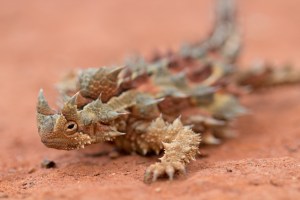
Analyzing diversification rate heterogeneity across phylogenies allows us to explore all manner of questions, including why Australia has such an incredible diversity of lizards and snakes.

Within the tree of life there are differences in speciation and extinction rates over time and across lineages. Biologists have long been interested in how speciation rates change as a function of ecological opportunity or whether key innovations lead to increases in the rate of speciation. Exploring this rate variation and examining how clades differ in terms of their diversification dynamics can help us to understand why species diversity varies so dramatically in time and space. Learning more about the relationship between traits and diversification rates is especially important because it has the potential to reveal the causes of pervasive variation in species richness among clades and across geographic regions.

Several different classes of methods are available for studying the effects of species traits on lineage diversification rates. These include state-dependent diversification models (e.g., BiSSE, QuaSSE, HiSSE) and several non-model-based approaches. In our article – ‘Tip rates, phylogenies and diversification: What are we estimating, and how good are the estimates?’ – we assessed the accuracy of a number of model-free metrics (the DR statistic, node density metric, inverse of terminal branch lengths) and model-based approaches (Bayesian Analysis of Macroevolutionary Mixtures, BAMM) to determine how they perform under a variety of different types of rate heterogeneity. The “tip rates” using these approaches have become widely used for a few reasons, including ease of computation and how easy it is to pair them with other types of data. Continue reading “Phylogenetic Tip Rates: How Well Can We Estimate Diversification?”

More New Associate Editors

Today we are welcoming another two Associate Editors to the Methods in Ecology and Evolution. Just like the seven AEs who joined last week, Michael Matschiner (of the University of Basel, Switzerland) and Tiago Bosisio Quental (of the University of São Paulo, Brazil) were both invited to work with the journal following our open call earlier this year. You can find out more about both of them … Continue reading More New Associate Editors

Methods Digest – December 2009

A round-up of methods papers published in the last month. If there are any papers that you think should be featured, email me or leave a comment and I will add them. Liam Revell has a paper in Evolution on size correction and principal components analysis of phylogenetic comparative data. Olivier Gimenez and colleagues also have a paper in the same issue on generating fitness … Continue reading Methods Digest – December 2009