Getting Every Last Bit Out of Dives: Data Abstraction On-board Telemetry Tags

Post provided by THEONI PHOTOPOULOU, MIKE FEDAK, LEN THOMAS and JASON MATTHIOPOULOS

Animal Telemetry for Air-breathing Divers
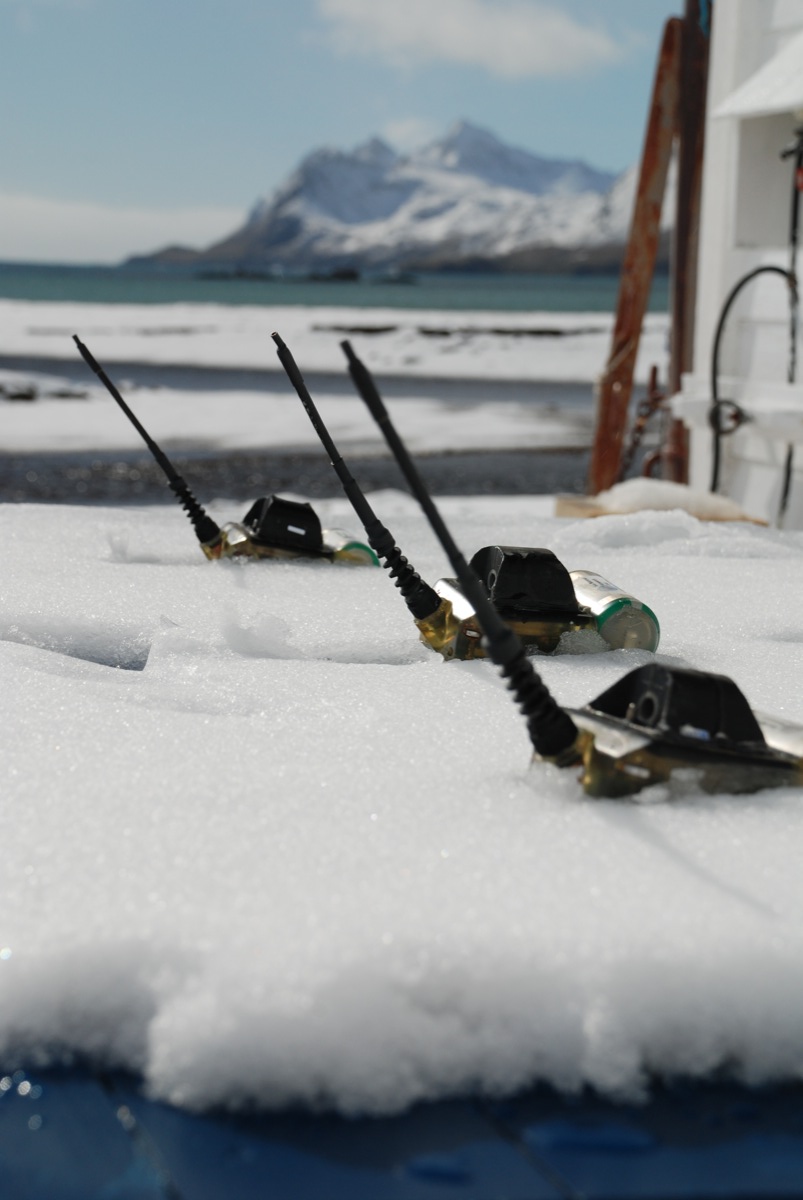
CTD-SRDL Tags
CTD-SRDL telemetry tags being primed for deployment. ©Theoni Photopoulou

Nowadays animal telemetry tags for air-breathing divers come in all shapes and sizes. In four short decades tags for diving animals have gone from prototypes like the one built by Jerry Kooyman for deployment on Weddell seals – which consisted of a kitchen timer and a roll of graph paper – to a multitude of sophisticated electronic devices, fit for just about any animal or purpose you can think of.

All this progress has meant we can collect more information than ever before and do so remotely. Nevertheless, the lives of most divers remain a well-kept secret. For tags that transmit what they collect (as opposed to those that store data until they’re retrieved), the transmission stage is usually the bottleneck. This has driven the development of energy and time efficient software and data processing.

For a tag like the conductivity-temperature-depth Satellite Relay Data Logger (CTD-SRDL) built by the Sea Mammal Research Unit Instrumentation Group at the University of St Andrews – which was designed to spend months at sea – the problem boils down to one thing. Data are collected at a high resolution on-board the tag amounting to 100kB daily, but only 1kB of this information (at best) can be transmitted to the ground station. Therefore in preparation for transmission, the data need to be chosen carefully, compacted and fitted into several satellite messages of fixed size to ensure that enough useful information is received. Each satellite message can hold up to 248bits of information. To give an idea of how limiting this is, consider that this sentence would (without compaction) take up 896bits! Continue reading “Getting Every Last Bit Out of Dives: Data Abstraction On-board Telemetry Tags”

On the Tail of Reintroduced Canada Lynx: Leveraging Archival Telemetry Data to Model Animal Movement

Post provided by FRANCES E. BUDERMAN

Animal Movement

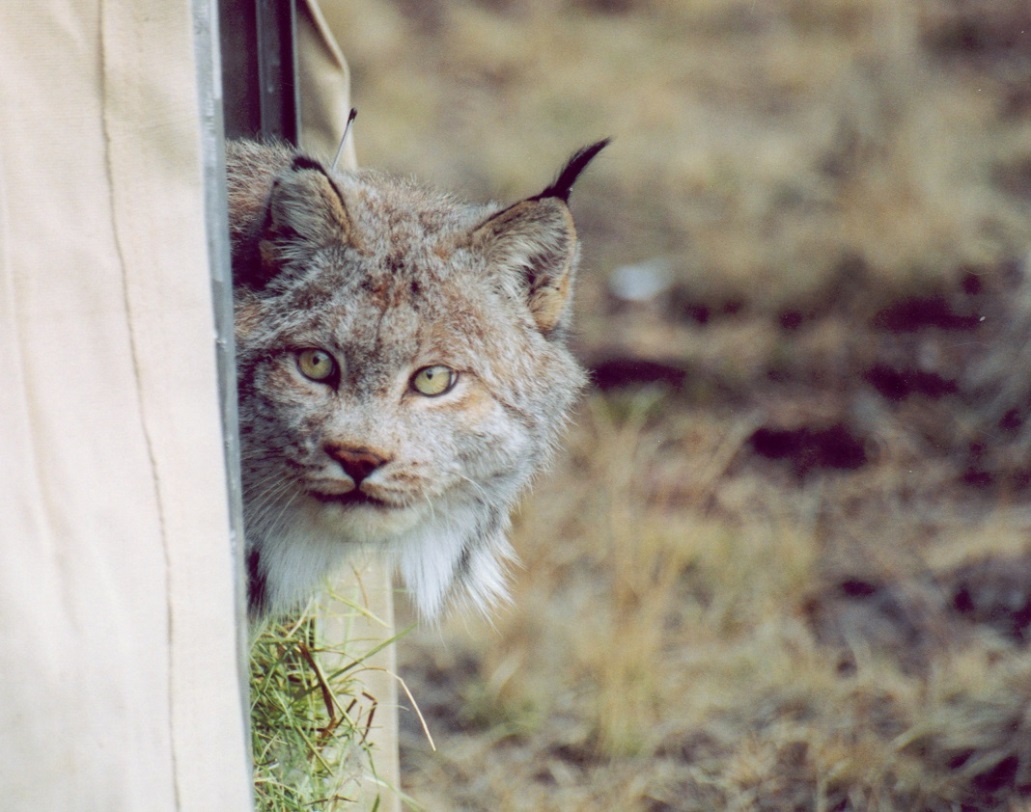
218 Canada lynx were reintroduced to the San Juan Mountains between 1999 and 2006 with VHF/Argos collars. © Colorado Parks and Wildlife

Animal movement is a driving factor underlying many ecological processes including disease transmission, extinction risk and range shifts. Understanding why, when and how animals traverse a landscape can provide much needed information for landscape-level conservation and management practices.

The theoretical underpinnings for modelling animal movement were developed about seventy years ago. Technological developments followed, with radio-collars initially deployed on large mammals such as grizzly bears and elk. We can now monitor animal movement of a wide variety of species, including those as small as a honeybee, at an unprecedented temporal and spatial scale.

However, location-based data sets are often time consuming and costly to collect. For many species, especially those that are rare and elusive, pre-existing data sets may be the only viable data source to inform management decisions. Continue reading “On the Tail of Reintroduced Canada Lynx: Leveraging Archival Telemetry Data to Model Animal Movement”

Recently accepted articles

We have been very busy in the past couple of weeks and we have a whole range of recently accepted articles: A novel digital telemetry system for tracking wild animals: a field test for studying mate choice in a lekking tropical bird Dan Mennill, Stéphanie Doucet, Kara-Anne Ward, Dugan Maynard, Brian Otis and John Burt A general theory of multimetric indices and their properties Donald … Continue reading Recently accepted articles

Network analyses of animal movement

Determining how animals move within their environment is a fundamental knowledge that contributes to effective management and conservation. In our latest video, David Jacoby and Edd Brooks explain how their paper brings together two disparate and rapid advancing fields: biotelemetry and social networking analyses. In a paper recently published in Methods, David, Edd and colleagues Darren Croft and David Sims, demonstrate some of the descriptive and … Continue reading Network analyses of animal movement

2011 top cited papers – part 3

Welcome to part 3 of our review of the most highly cited papers published by Methods in Ecology and Evolution in 2011. In case you missed them, here are part 1 and part 2 of this series. Population monitoring and management Meta-analysis of transmitter effects on avian behaviour and ecology Douglas G. Barron, Jeffrey D. Brawn and Patrick J. Weatherhead The effects of geolocator drag … Continue reading 2011 top cited papers – part 3

A year of podcasts and videos

We have been uploading videos and podcasts for a year now – these have proved really popular, both with authors and readers of the journal. I thought I would just take this opportunity to highlight some of the online content that is supporting articles from the first 3 issues: Our podcasts include:- An introduction to meta analysis Modelling range shifts The Primate Life-History Database Phenological … Continue reading A year of podcasts and videos

Issue 2 is now online

Issue 2 of Methods in Ecology and Evolution is now online, the table of contents is here.  In this issue there are 14 new papers on: Statistical methods Monitoring & modelling plant populations Telemetry Entomology Modelling wildlife disease Building databases of life-history traits GIS methods One innovation is that we now have a correspondence site: http://www.respond2articles.com/mee/ From here you can send in correspondence about papers, … Continue reading Issue 2 is now online

Methods Digest – March 2010

The first thing to point out this month is that issue 1 of the journal is now online here. To accompany the issue we have a podcast and a videocast. There is also now a  journal correspondence site to host feedback and discussion of published papers, more on this soon. The one day journal launch symposium is accepting bookings, with a good response so far. However … Continue reading Methods Digest – March 2010

Allometry, statistics, telemetry and physiology – new papers online

Four more papers have gone online this month and we are close to being able to put together the first issue of the journal! In the first new paper to be published Adrian Barnett and colleagues present a comparison of methods for selecting the correct variance structure for longitudinal data. This is likely to be of considerable interest as it is a paper about how … Continue reading Allometry, statistics, telemetry and physiology – new papers online