Blog post provided by Hubert A. Szczygieł
Origins
Back in 2022, I was in Panama working on landscape-scale biodiversity monitoring. The system I was testing included a lot of standard approaches – for example trail cameras for mammals, point counts and passive acoustic monitoring for birds, and Gentry transects for trees. However, I realized that none of the standard insect monitoring methodologies work for large-scale systematic surveys. I didn’t have the time to process bulk insect collections, and DNA metabarcoding would have cost as much as all of my other protocols combined. I was getting into recreational moth-sheeting at the time, and I did some research on ways that I could monitor nocturnal insects systematically. In that process, I found a paper by Toke Hoye’s group in Aarhus, and thought ‘Perfect! Here’s my solution, I’ll just make some of the automated light traps described there and I’m good-to-go on the insect front.’
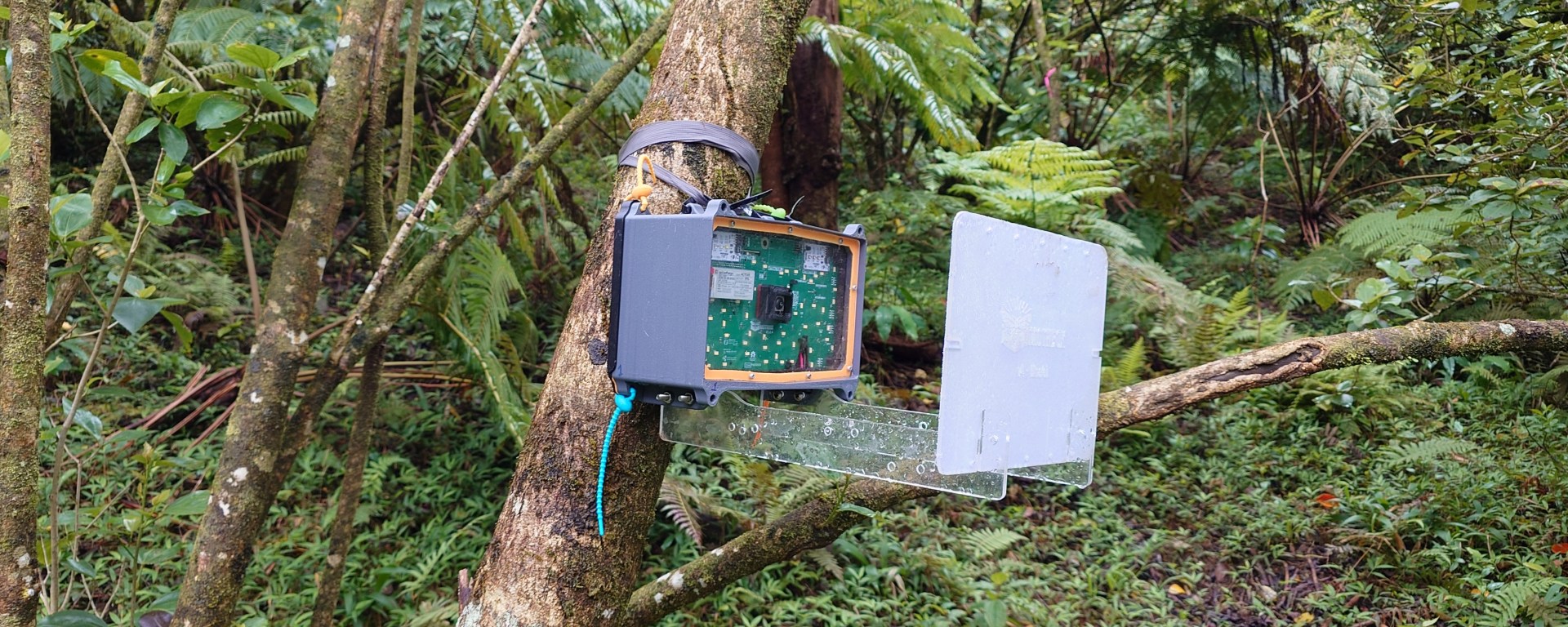
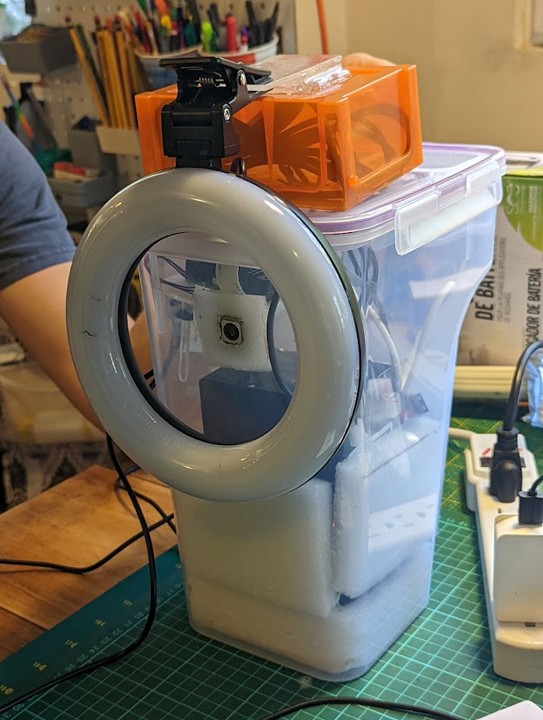
I quickly realized that the paper outlined a proof of concept, not a robust device I could easily put together and trust to survive in the jungles of Panama. I needed Andy for this one. Andy Quitmeyer, a hacker and ‘digital naturalist’ set up Digital Naturalism Laboratories (Dinalab) in Gamboa, Panama, a small town surrounded by rainforest and full of ecologists like myself working at the Smithsonian Tropical Research Institute. Dinalab is a workshop and technology prototyping studio, created to help tropical field ecologists develop the tools they need for their work. I came to Andy with some electronics I ordered online, a Tupperware box and a scooter battery from the hardware store, and the goal of creating a jungle-version of the automated light trap from the paper I found. What we put together was rudimentary, but it attracted insects and took photos – Mothbox was born.
Our breakthrough
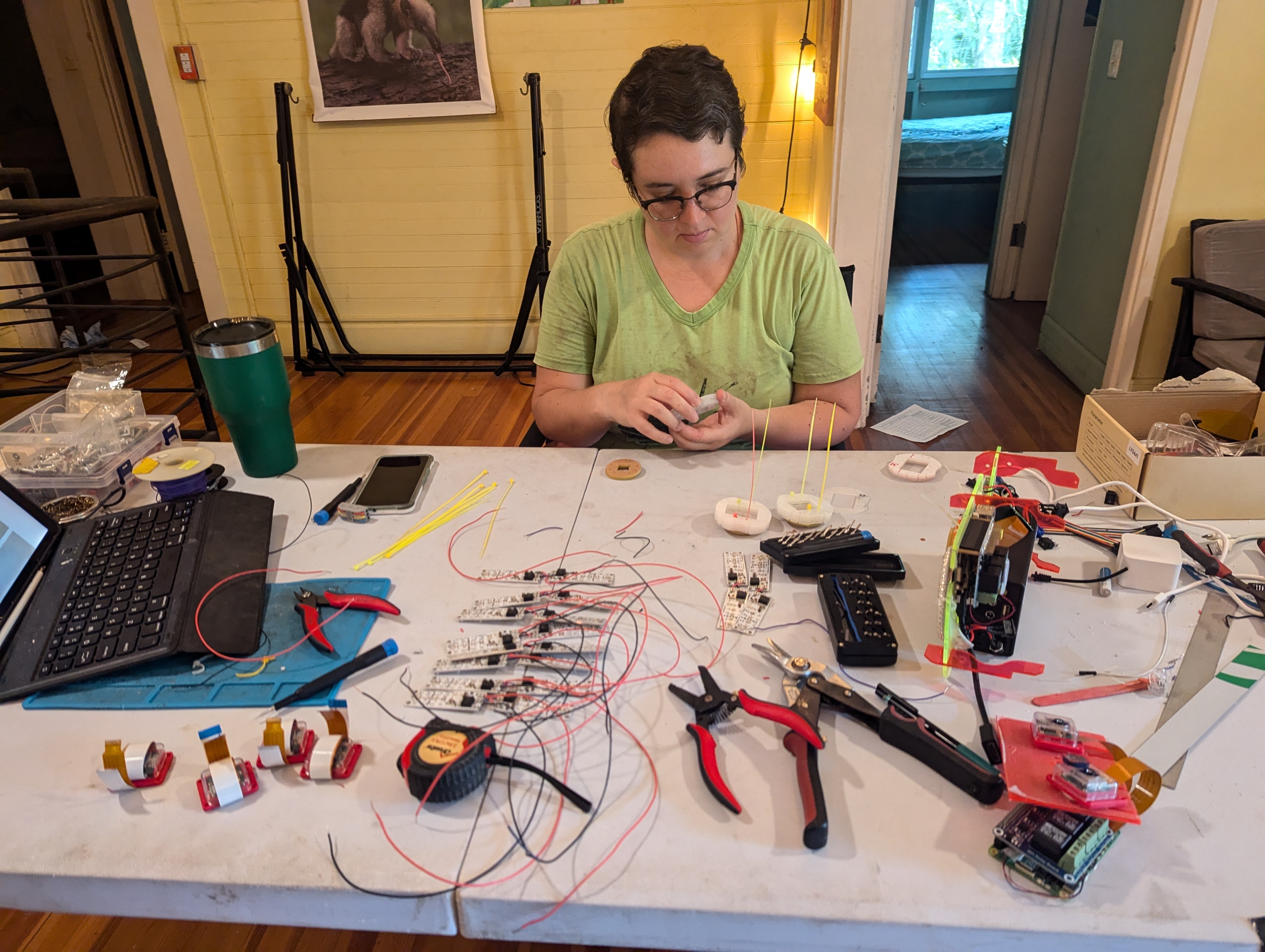
We found small grants to iterate on the design and keep the project alive. Mothbox 2.0 was a drone-deployable design we made for the Rainforest XPRIZE competition. We tested Mothbox 3.0 in the Azuero Peninsula, in partnership with Pro Eco Azuero, a Panamanian reforestation NGO. Each iteration fixed new problems we found in the field or explored new ways to make it easier for users. Our big breakthrough came when we won the 2024 WILDLABS Awards, which gave us the runway to design Mothbox 4.0 – a truly robust device with extensive documentation on construction, use, and repair, that other groups were now starting to build. We were producing thousands of photos, but had no way of processing them, so Kit Quitmeyer, Andy’s partner and co-founder of Dinalab, went through 4,500 Mothbox photos, cropping out insects to create the dataset that underpins our detection model, while Andy built the first version of ‘Mothbot’, our data processing platform to detect and identify photos.
We have been fully open-source and well documented from the start, so people began reaching out to us to say how excited they were about the project, and asking how they could help. Moritz Buttlar of LabLab designed inexpensive, open-source LED insect-attraction lights, which would become ‘Mothbeams’. We then got invited to Beetlepalooza in Ohio where the group who creates bioCLIP helped us integrate their identification models to our workflow. We had Bri Johns join our team as a Fulbright scholar studying Mothbox as a case study of open science hardware. Andy kept developing hardware, firmware, and data processing software, so Mothbox 4.5 (what we now call ‘Mothbox DIY’) became a field-ready piece of scientific equipment that we deployed across Panama.
Cerro Hoya Expedition
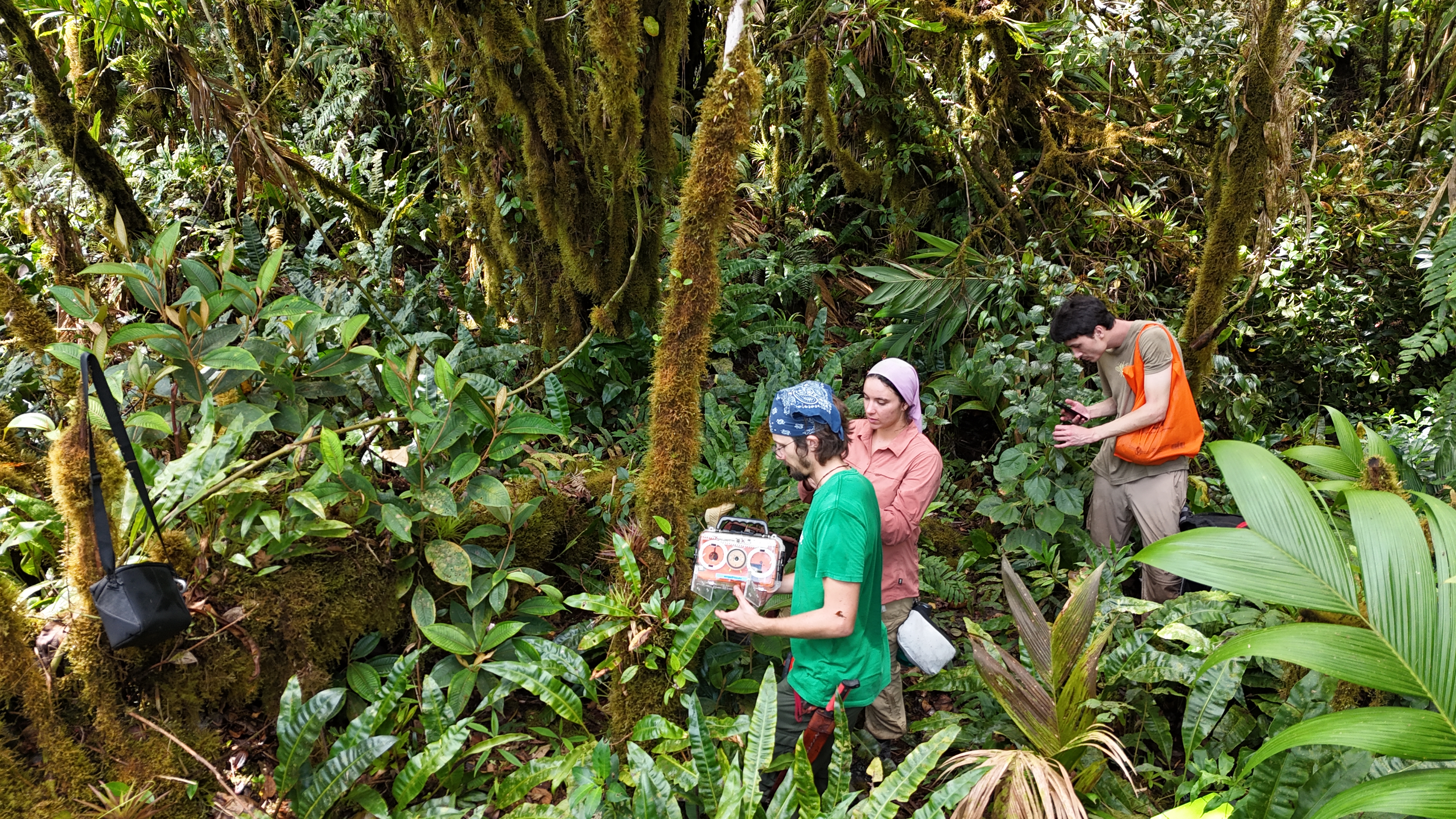
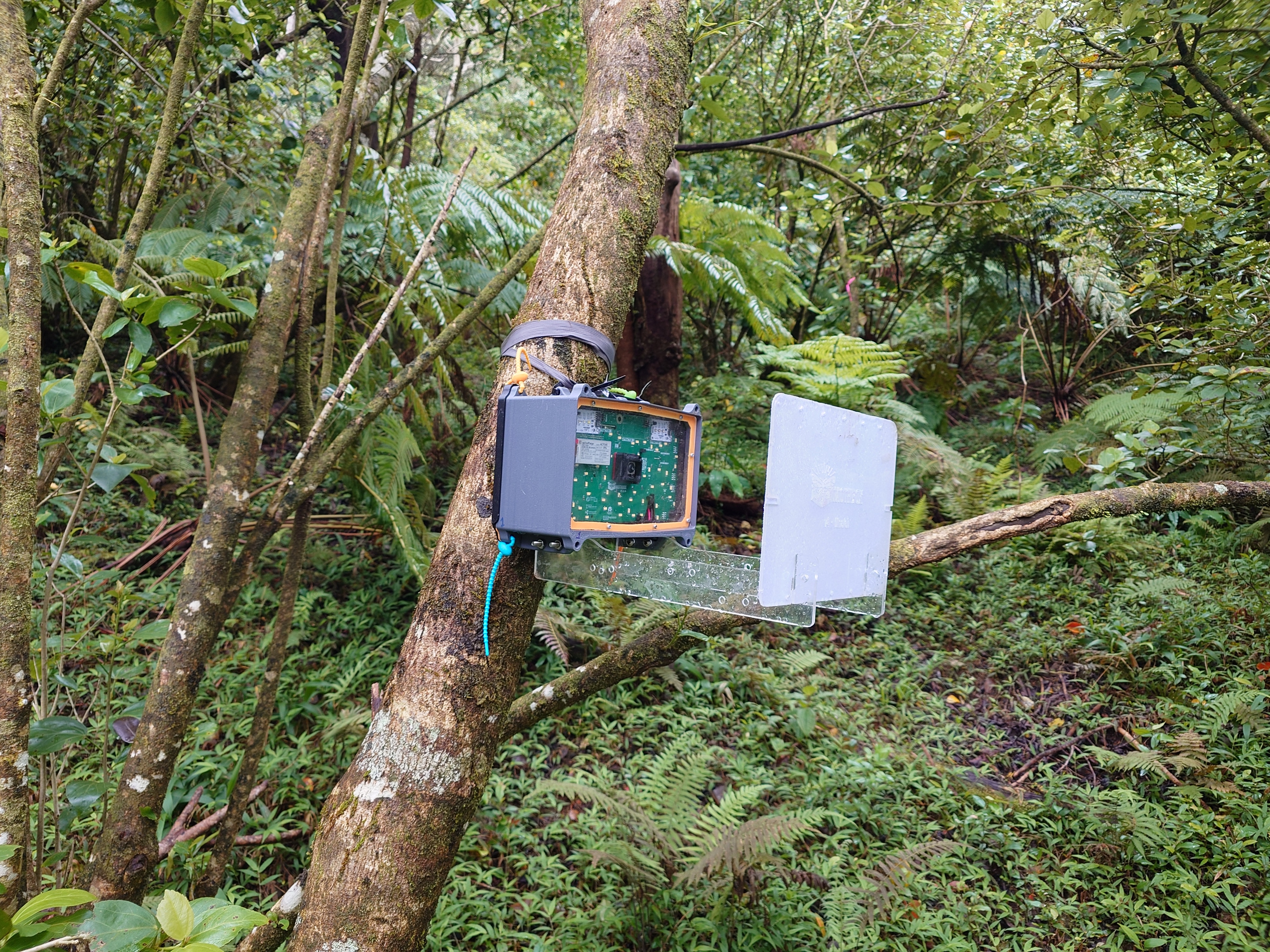
The crowning achievement of our 2024 WILDLABS award was an (expedition to Cerro Hoya National Park), where we deployed 19 Mothboxes along a remote elevation gradient. We hiked up a mountain, from near sea level to cloud forest over 1500m, deploying Mothboxes which were all programmed to collect data simultaneously. We spent three nights camping in the mountains before collecting the Mothboxes and hiking back down. We got to see some amazing insects, including a harlequin beetle and a giant caterpillar which we reared into a white witch moth, solving a 300 year old mystery of what the larvae looked like of the moth with the world’s largest wingspan. Most importantly, no other tool would have been able to collect the rich dataset we collected on this expedition, pairing population dynamics and activity patterns across the elevation gradient. A paper documenting the results of the expedition has recently been accepted at Integrative & Comparative Biology.
A mass-producable Mothbox
The demand for Mothbox was rising! We were receiving more requests by the day in 2025. While the DIY model can be built by anyone, many people would rather buy a pre-made version rather than tinkering around DIY construction. We won the 2025 WILDLABS Awards with the promise to develop a mass-producible version of the Mothbox. We had no prior experience in manufacturing design, but the open source community came to our aid: Joel Murphy at the Open Source Hardware Summit and Paul Hamilton at the Digital Naturalism Conference helped us combine most of the electronic components into a single board that can be ordered online. Combined with a 3D printable housing, a Mothbox can be put together in just a couple hours. We expect over 200 Mothboxes in operation this summer around the world. Everything is always fully open source so we are working with a network of open hardware distributors to fulfil orders.
Now we had a scalable and field-tested device paired with AI image processing models that identified our insects. However, as we processed more and more data, we realized that the identification models work very poorly, particularly in Panama where insect diversity is very high and reference data is relatively sparse. We only trust the model to identify insects to Order level right now, and even that needs validation to get truly accurate results. We needed a good system to rapidly validate thousands of insect detections and refine identifications. Bernat Fortet of Restoration Scope joined the team and created Mothbot Classify, a user interface for doing just that.
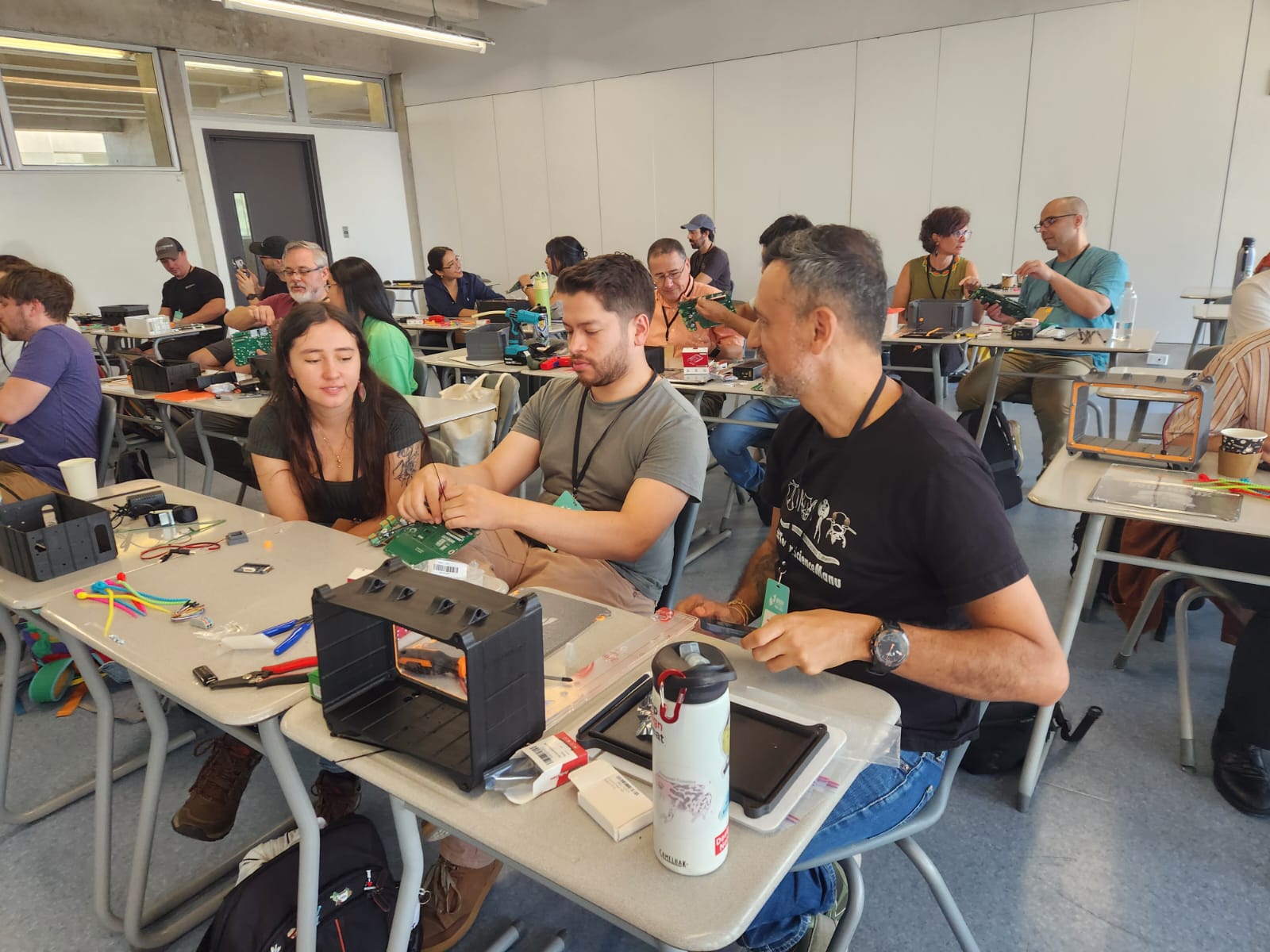
Full steam ahead!
These are exciting times for the world of automated insect monitoring, and Mothbox will play a central role as this nascent field grows. Personally, I’m really looking forward to incorporating Mothboxes into my large-scale biodiversity monitoring work, but it’s great to see other groups stating to use Mothboxes for a diversity of purposes: studying insect behavior, measuring insects alongside predatory bats, creating Mothbox stations for long-term monitoring, and so much more. In 2022 we had a tupperware box full of wires, and this summer there will be over 200 lightweight, robust, Mothboxes deployed by over a dozen research groups around the world. I’m confident that in several more years Mothboxes will give insect monitoring the level of ease and scalability that digital trail cameras gave to mammal research and passive acoustic sensors gave to bird monitoring.
Further reading:
MEE paper: https://besjournals.onlinelibrary.wiley.com/doi/10.1111/2041-210x.70327
Mothbox website: https://mothbox.org

