Ultrasound for trees? Using focused ultrasound technology as a new method of DNA extraction

Post provided by Hal Holmes

Each year Methods in Ecology and Evolution awards the Robert May Prize to the best paper in the journal by an author at the start of their career. Hal Homes has been shortlisted for their article ‘Focused ultrasound extraction (FUSE) for the rapid extraction of DNA from tissue matrices’. In this blog, Hal discusses how their paper came to be and the future applications of FUSE technology.

Continue reading “Ultrasound for trees? Using focused ultrasound technology as a new method of DNA extraction”
MEDI: Macronutrient Extraction and Determination from Invertebrates

Post provided by Jordan Cuff and Maximillian Tercel

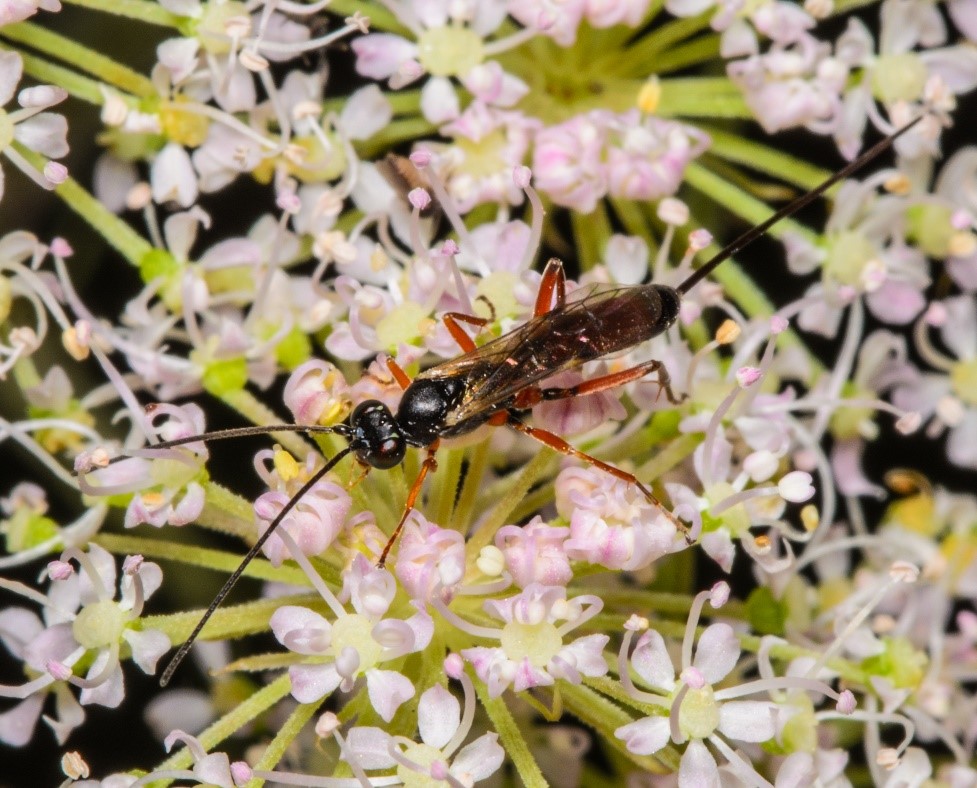
MEDI can be applied to a broad range of small invertebrate specimens, including parasitoid wasps. Credit: Jordan Cuff.

Are you kept awake at night wondering how you would measure the macronutrient content of small invertebrates? Perhaps you have tried but are haunted by the disappointment that you have had to rely on conversion factors, analogues and pooled samples. Get ready to sleep soundly, entomological entrepreneur!

In this blog post, Jordan Cuff and Maximillian Tercel will discuss their latest study published in Methods in Ecology and Evolution, concerning their brand-new method for measuring macronutrient content in invertebrates: MEDI.

Continue reading “MEDI: Macronutrient Extraction and Determination from Invertebrates”

Gaining Genetic and Epigenetic Data from a Single Established Next-Generation Sequencing Approach

Post provided by Marco Crotti

How organisms adapt to the environment they live in is a key question in evolutionary biology. Genetic variation, i.e. how individuals within populations differ from each other in terms of their DNA, is an essential element in the process of adaptation. It can arise through different mechanisms, including DNA mutations, genetic drift, and recombination.

Example of how genetic drift can occur over generations via random sampling (i.e. random mating) in a population. (Picture credit: Gringer).

Differences in DNA sequences between individuals can results in differences in the expression of genes. This can therefore determine the organism’s capacity to grow, develop, and react to environmental stimuli. However, a growing body of literature reveals that there are other ways organisms can change the way they interact with the world without mutations in the DNA sequence.

Continue reading “Gaining Genetic and Epigenetic Data from a Single Established Next-Generation Sequencing Approach”

A Surgical Approach to Dissection of an Exotic Animal

Post provided by Aaron T Irving, Justin HJ Ng and Lin-fa Wang

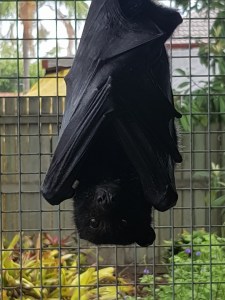
An Australian black flying fox – missing an ear, but fit for release.

Bats. They’re amazing creatures. Long-lived (with relevance to their body size), echolocating (for microbats and some megabats), metabolically-resilient (apparently resilient to most virus infections) flying mammals (with heart beats up to 1200 bpm for hours during flight). There are 1,411 species of this incredible creature. But very little is known about their physiology and unique biological traits. And detailed evolutionary analysis has only just begun.

The problem is, they’re an ‘exotic’ animal (wildlife that most people do not come into contact with). Being a long-lived animal producing minimal offspring (most only have one baby per year), they’re not suited to the kind of experimental studies we do with other animals like mice. Unavoidably, some aspects of biology require the use of tissues and cells. These samples can be used for sequencing, genomics, molecular evolution studies, detailed transcriptomic analysis, functional experiments with specific cell types and much more. Some methodology is beginning to be published – such as capture techniques and wing punch/genomic isolation – but there’s been an absence of protocols for the processing of bats. This is essential for the field to maximise the potential application of each individual and for minimising non-essential specimen collection.

Continue reading “A Surgical Approach to Dissection of an Exotic Animal”

The Self-Preserving eDNA Filter: How It Works and Why You Should Use It

Researchers at Washington State University and Smith-Root recently invented an environmental DNA (eDNA) filter housing that automatically preserves captured eDNA by desiccation. This eliminates the need for filter handling in the field and/or liquid DNA preservatives. The new material is also biodegradable, helping to reduce long-lasting plastic waste associated with eDNA sampling. This video explains their new innovation in the field of eDNA sampling technology: … Continue reading The Self-Preserving eDNA Filter: How It Works and Why You Should Use It

Stereo DOV: A Non-Invasive, Non-Destructive Way to Study Fish Populations

It’s more important than ever for us to have accurate information to help marine conservation efforts. Jordan Goetze and his colleagues have provided the first comprehensive guide for researchers using diver operated stereo-video methods (or stereo-DOVs) to survey fish assemblages and their associated habitat. But what is Stereo DOV? What makes it a better method than the traditional UVC (Underwater Visual Census) method? And when … Continue reading Stereo DOV: A Non-Invasive, Non-Destructive Way to Study Fish Populations

Quantifying Animal Movement from Videos

Quantifying animal movement is central to research spanning a variety of topics. It’s an important area of study for behavioural ecologists, evolutionary biologists, ecotoxicologists and many more. There are a lot of ways to track animals, but they’re often difficult, especially for people who don’t have a strong background in programming. Vivek Hari Sridhar, Dominique G. Roche and Simon Gingins have developed a new, simple software to … Continue reading Quantifying Animal Movement from Videos

How to Assemble, Fill and Clean Metapopulation Microcosm Plates: Two Video Tutorials

Metapopulation Microcosm Plates (MMP) are devices which resemble 96-well microtiter plates in size and shape, but with corridors connecting the wells in any configuration desired. They can be used to culture microbial metapopulations or metacommunities with up to 96 habitat patches.

In these two video tutorials, Helen Kurkjian explains how you can assemble, fill and clean MMPs in your lab.

Continue reading “How to Assemble, Fill and Clean Metapopulation Microcosm Plates: Two Video Tutorials”

Scales, Slime and Dragon(fly) Wings? Investigating the Surfaces of Organisms

Post provided by Dylan Wainwright Our recent Methods in Ecology and Evolution paper – ‘Imaging biological surface topography in situ and in vivo‘ – shows how to use gel-based profilometry to image various biological surfaces. To start you need to press a gel into a surface of interest. The bottom surface of the gel is coated in a paint to create an impression of the surface that has standard optical … Continue reading Scales, Slime and Dragon(fly) Wings? Investigating the Surfaces of Organisms

Animation Meets Biology: Shedding New Light on Animal Behaviour

Below is a press release about the Methods paper ‘Integrating evolutionary biology with digital arts to quantify ecological constraints on vision-based behaviour‘ taken from the La Trobe University.

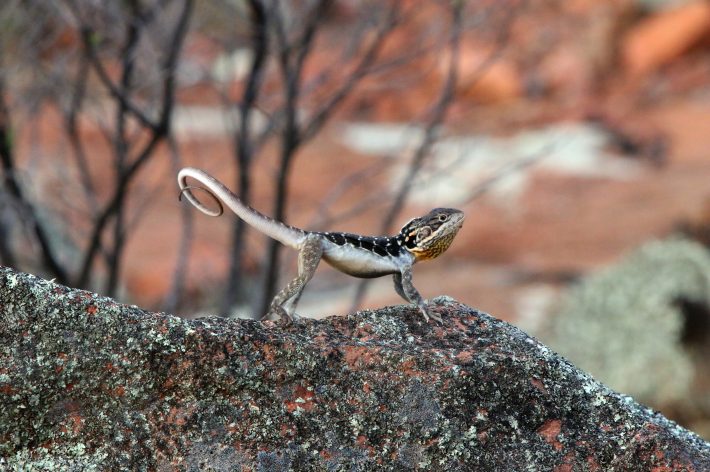
Ctenophorus fionni (Peninsula Dragon), male push up display - Copyright Jose Ramos, La Trobe University
Ctenophorus fionni (Peninsula Dragon), male push up display. © Jose Ramos, La Trobe University

Many animals rely on movement to find prey and avoid predators. Movement is also an essential component of the territorial displays of lizards, comprising tail, limb, head and whole-body movements.

For the first time, digital animation has been used as a research tool to examine how the effectiveness of a lizard’s territorial display varies across ecological environments and conditions. The new research was published today in the journal Methods in Ecology and Evolution.

A team from La Trobe University’s School of Life Sciences, led by Dr Richard Peters, worked with academics from Monash University’s Faculty of IT to create, using 3D animation, a series of varied environmental settings and weather conditions, comprising different plant environments and wind conditions, to quantify how lizard displays are affected by this variation. Continue reading “Animation Meets Biology: Shedding New Light on Animal Behaviour”