Another year ALDER, another year wiser.

Pride Month is almost over, and to round off this year’s wonderful Rainbow Research blog series we are pleased to host this post from Lewis Bartlett announcing the launch of the ALDER Network: the British Ecological Society’s relaunched LGBTQIA+ Network. Hello readers! Welcome to my second year in a row getting to write a Rainbow Research blog post for the BES, and this Pride month … Continue reading Another year ALDER, another year wiser.

Rainbow Research: Nature

Post provided by Sara Blunk (she/her)

The Rainbow Research series returns to the British Ecological Society to celebrate Pride month 2022! These special posts promote visibility and share stories from STEM researchers who belong to the LGBTQIA2S+ community. Each post is connected to one of the themes represented by the colours in the Progress Pride flag (Daniel Quasar 2018). In this post, Sara Blunk shares her love of birds and experiences being an LGBTQ+ student.

Continue reading “Rainbow Research: Nature”

Rainbow Research: Life

Post provided by Adrian Monthony (he/him)

The Rainbow Research series returns to the British Ecological Society to celebrate Pride month 2022! These special posts promote visibility and share stories from STEM researchers who belong to the LGBTQIA2S+ community. Each post is connected to one of the themes represented by the colours in the Progress Pride flag (Daniel Quasar 2018). In this post, Adrian Monthony shares changes in his life and Pride journey.  

Continue reading “Rainbow Research: Life”

ATLAS: a regional-scale tracking system

Post provided by Christine Beardsworth

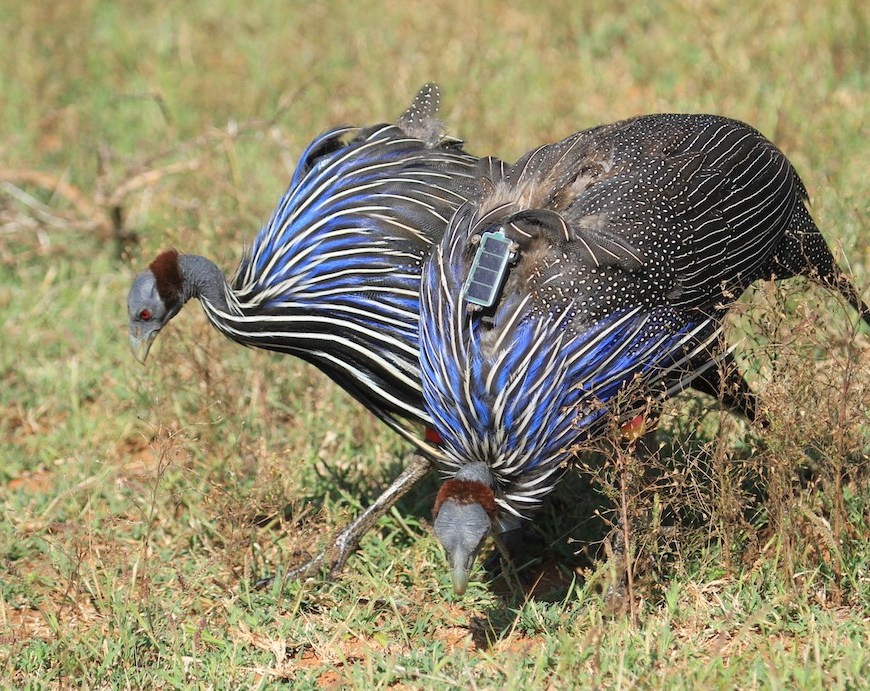
Tracking the movement of animals is important for informing conservation practices but can present logistical obstacles, especially when attempting to track smaller species with large GPS tags. Using existing technologies in new ways may help overcome these obstacles and provide alternative approaches for accurately tracking large numbers of relatively small sized species. In this blog post, Christine Beardsworth discusses findings from her recent Methods in Ecology and Evolution paper “Validating ATLAS: a regional-scale, high-throughput tracking system”.

Continue reading “ATLAS: a regional-scale tracking system”

Rainbow Research – Harmony

Post provided by Renske Jongen The Rainbow Research series returns to the British Ecological Society to celebrate Pride month 2022! These special posts promote visibility and share stories from STEM researchers who belong to the LGBTQIA2S+ community. Each post is connected to one of the themes represented by the colours in the Progress Pride flag (Daniel Quasar 2018). In this post, Renske Jongen shares her … Continue reading Rainbow Research – Harmony

June 2022 Issue Out Now

Our June Issue is now online! This issue contains 16 brilliant articles about the latest methods in ecology and evolution, including methods for extracting forest information from LiDAR data, digitising wood samples, optimising stable isotope sampling design and much more! Read on to find out about this month’s featured articles and the article behind our butterfly cover. Featured Articles treetop Individual tree detection and crown delineation are … Continue reading June 2022 Issue Out Now

Rainbow Research: Healing

Post provided by Douglas Cirino

The Rainbow Research series returns to the British Ecological Society to celebrate Pride month 2022! These special posts promote visibility and share stories from STEM researchers who belong to the LGBTQIA2S+ community. Each post is connected to one of the themes represented by the colours in the Progress Pride flag (Daniel Quasar 2018). In this post, Douglas Cirino shares their story of healing in São Paulo.    

Continue reading “Rainbow Research: Healing”

Visualising the flow of matter within ecosystems

Post provided by Mateusz Iskrzyński Would you like to quickly get a clear picture of the food web you are modelling or analysing? Have you thought about including its visualisation in your paper? Or maybe you wanted to show your students or general audience how interconnected food webs are in real ecosystems? Or just wondered how matter flows through an ecosystem? To help you with … Continue reading Visualising the flow of matter within ecosystems

Hidden Markov models have pitfalls…

…but also opportunities! Hidden Markov models (HMMs) and their extensions are attractive methods for analysing ecological data. In recent years, a variety of extensions of the basic model have been proposed, yielding great opportunities for ecological inference. Yet, as these models become more complex and challenging to understand, it is important to consider what pitfalls these methods have and what opportunities there are for future … Continue reading Hidden Markov models have pitfalls…

Modelling and inference for the movement of interacting animals

Post provided by Jordan Milner

Each year Methods in Ecology and Evolution awards the Robert May Prize to the best paper published in the journal by an author at the start of their career. Ten Early Career Researchers made the shortlist for this year’s prize, including Jordan Milner who studied for his PhD at the University of Sheffield in the UK. In this interview, Jordan shares insights on his paper ‘Modelling and inference for the movement of interacting animals’.

Continue reading “Modelling and inference for the movement of interacting animals”