Listening to trees: uncovering the seismic fingerprint of wind-induced tree sway

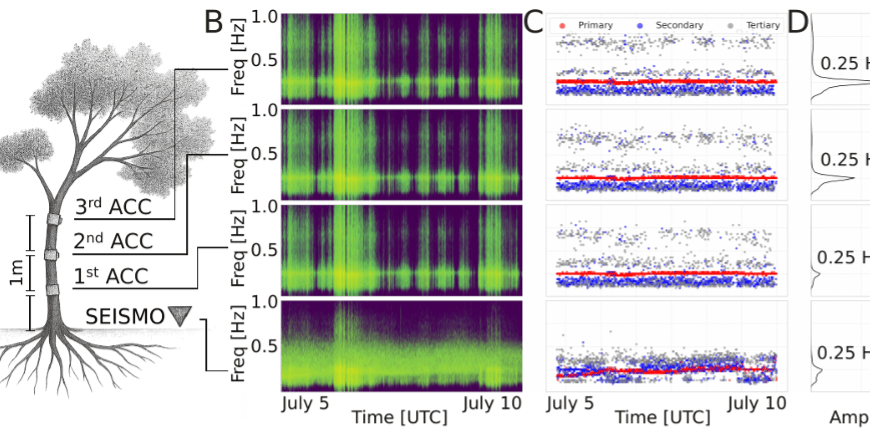
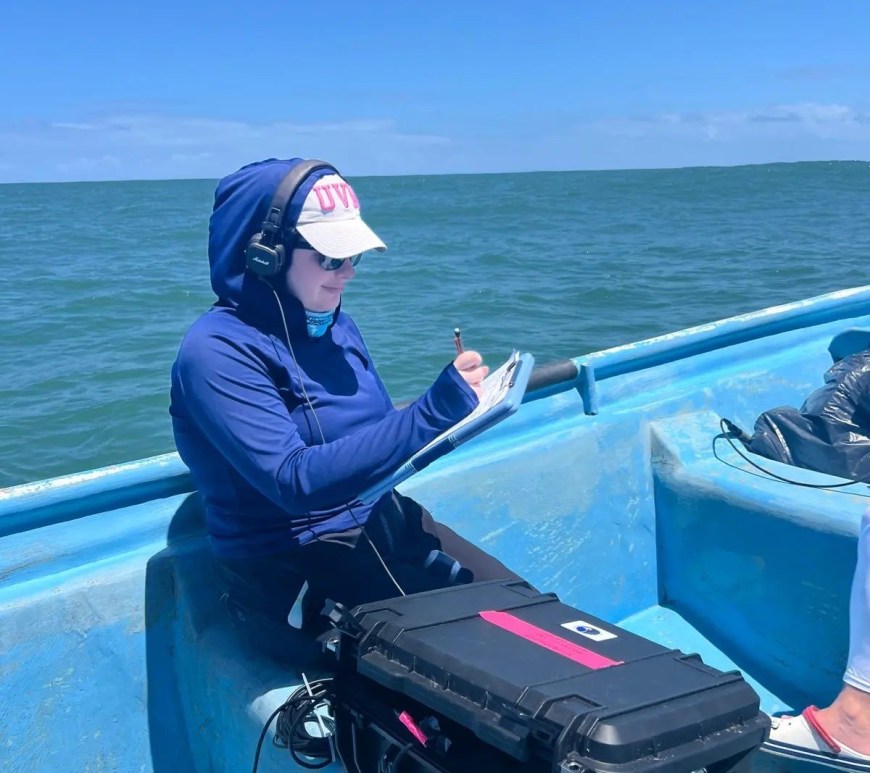
Post provided by Josefine Umlauft. We are a group of geophysicists, mathematicians, and ecologists who normally speak quite different scientific languages. This project brought us together through a shared curiosity: could the instruments and analytical tools originally developed for studying earthquakes also help us understand how trees move in the wind? The result, The Seismic Fingerprint of Wind-Induced Tree Sway, grew out of conversations between … Continue reading Listening to trees: uncovering the seismic fingerprint of wind-induced tree sway

Avoiding Confusion: Modelling Image Identification Surveys with Classification Errors

Post provided by Jon Barry We are a group comprised of statisticians, ecologists and a computer scientist. Back in 2021 when this work started, we were all employed at the Centre for Environment, Fisheries and Aquacultural Science (Cefas) at Lowestoft, U.K. Since then, Robert, our computer scientist, has ‘jumped ship’ (no pun intended) to the Alan Turing Institute. We were aware that AI image recognition … Continue reading Avoiding Confusion: Modelling Image Identification Surveys with Classification Errors

The need to quantify complex shapes

Robert May Prize Shortlisted Article

Post provided by Arthur Porto

Credit: Kjetil Voje

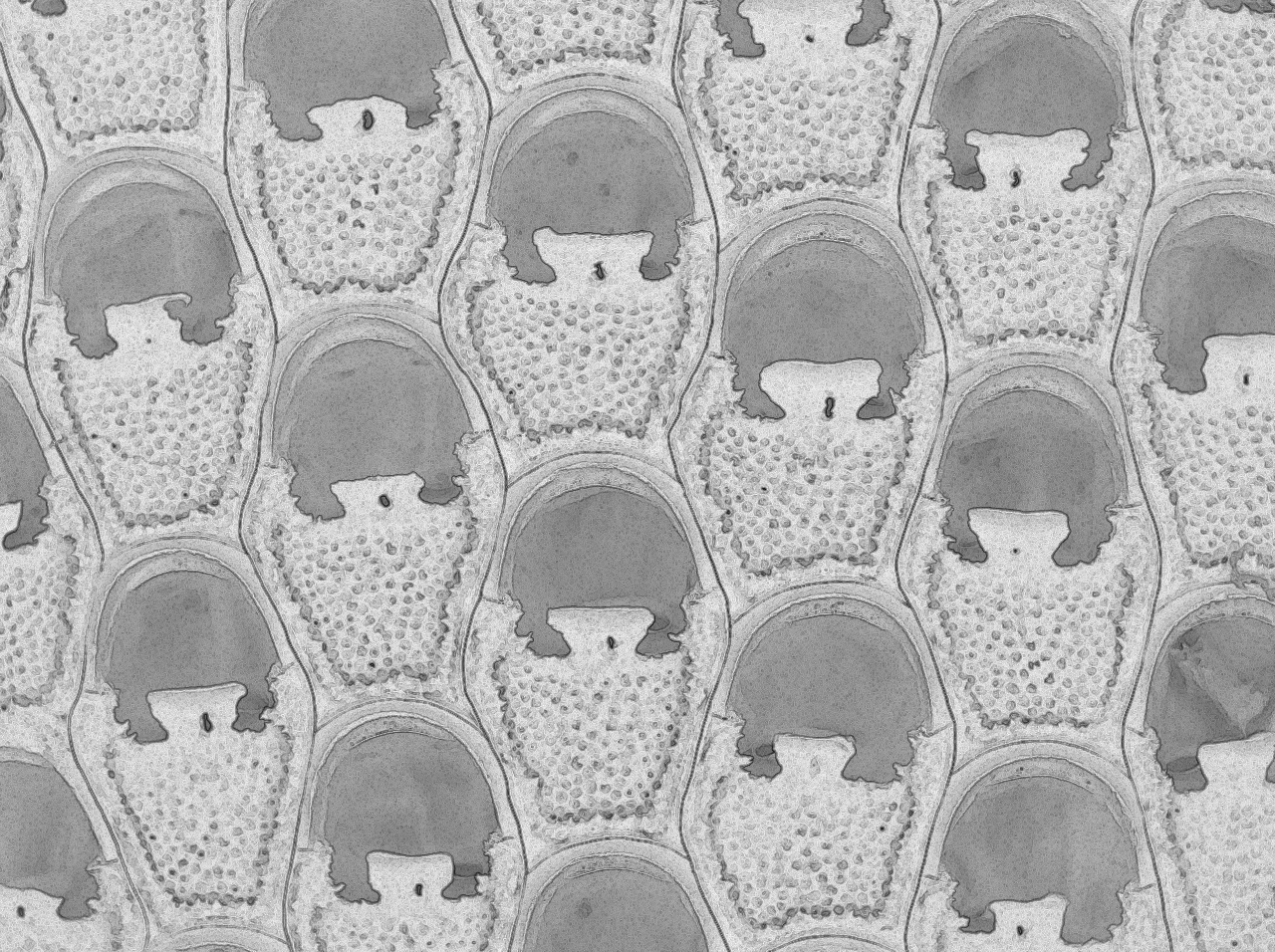
Each year Methods in Ecology and Evolution awards the Robert May Prize to the best paper in the journal by an author at the start of their career. Arthur Porto has been shortlisted for his article ‘ML‐morph: A fast, accurate and general approach for automated detection and landmarking of biological structures in images’. In this blog, Arthur discusses how his paper came to be and describes development of the ML-morph pipeline.

Continue reading “The need to quantify complex shapes”

Biomechanically-Aware Behaviour Recognition using Accelerometers

Post provided by Pritish Chakravarty


Accelerometers, Ground Truthing, and Supervised Learning

Accelerometers are sensitive to movement and the lack of it. They are not sentient and must recognise animal behaviour based on a human observer’s cognition. Therefore, remote recognition of behaviour using accelerometers requires ground truth data which is based on human observation or knowledge. The need for validated behavioural information and for automating the analysis of the vast amounts of data collected today, have resulted in many studies opting for supervised machine learning approaches.

Ground-truthing. The acceleration data stream (recorded using the animal-borne data logger, bottom-left) is synchronised with simultaneously recorded video (near top right). Picture credit: Kamiar Aminian

In such approaches, the process of ground truthing involves time-synchronising acceleration signals with simultaneously recorded video, having an animal behaviour expert create an ethogram, and then annotate the video according to this ethogram. This links the recorded acceleration signal to the stream of observed animal behaviours that produced it. After this, acceleration signals are chopped up into finite sections of pre-set size (e.g. two seconds), called windows. From acceleration data within windows, quantities called ‘features’ are engineered with the aim of summarising characteristics of the acceleration signal. Typically, ~15-20 features are computed. Good features will have similar values for the same behaviour, and different values for different behaviours.

Continue reading “Biomechanically-Aware Behaviour Recognition using Accelerometers”

Issue 11.4: Population Dynamics, Machine Learning, Morphometrics and More

The April issue of Methods is now online!

The latest issue of Methods in Ecology and Evolution is now online! This month’s issue is a little shorter than our last few. But, as they say, good things come in small packages!

Senior Editor Lee Hsiang Liow has selected six Featured Articles this month. You can find out about all of them below. We’ve also got five Applications articles and a Practical Tools article in the April issue that we’re going to cover. Those six papers are freely available to everyone – no subscription required!

On top of all that, the April issue includes articles on camera traps, land cover classification, presence-absence sampling and more.

Continue reading “Issue 11.4: Population Dynamics, Machine Learning, Morphometrics and More”

Hyperoverlap: Detecting Overlap in n-Dimensional Space

Post provided by Matilda Brown, Barbara Holland, and Greg Jordan

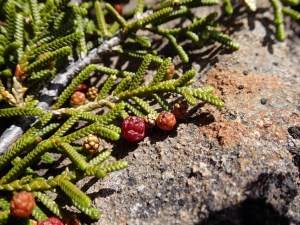
Overlap can help us to learn why Microcachrys
is now only found in the mountains of
Tasmania. ©Greg Jordan

There are many reasons that we might be interested in whether individuals, species or populations overlap in multidimensional space.  In ecology and evolution, we might be interested in climatic overlap, morphological overlap, phenological or biochemical overlap. We can use analyses of overlap to study resource partitioning, evolutionary histories and palaeoenvironmental conditions, or to inform conservation management and taxonomy. Even these represent only a subset of the possible cases in which we might want to investigate overlap between entities. Databases such as GBIF, TRY and WorldClim make vast amounts of data publicly available for these investigations. However, these studies require complex multivariate data and distilling such data into meaningful conclusions is no walk in the park.

Continue reading “Hyperoverlap: Detecting Overlap in n-Dimensional Space”

Teaching Computers to Think like Ecologists

Post provided by CHRIS TERRY

Artificial intelligence (or AI) is an enormously hot topic, regularly hitting the news with the latest milestone where computers matching or exceeding the capacity of humans at a particular task. For ecologists, one of the most exciting and promising uses of artificial intelligence is the automatic identification of species. If this could be reliably cracked, the streams of real-time species distribution data that could be unlocked worldwide would be phenomenal.

ladybird-stock_thumbDespite the hype and rapid improvements, we’re not quite there yet. Although AI naturalists have had some successes, they can also often make basic mistakes. But we shouldn’t be too harsh on the computers, since identifying the correct species just from a picture can be really hard. Ask an experienced naturalist and they’ll often need to know where and when the photo was taken. This information can be crucial for ruling out alternatives. There’s a reason why field guides include range maps!

Currently, most AI identification tools only use an image. So, we set out to see if a computer can be taught to think more like a human, and make use of this extra information. Continue reading “Teaching Computers to Think like Ecologists”

Issue 11.2: Stable Isotopes, in situ Monitoring, Image Analysis and more

The February issue of Methods is now online!

The latest issue of Methods in Ecology and Evolution is now online!

Executive Editor Rob Freckleton has selected six Featured Articles this month. You can find out about all of them below. We’ve also got six Applications articles and five Open Access articles in the February issue – we’ll talk about all of those here too.

On top of all that, the February issue includes articles on population genetics, ecological assemblages, and reconstruction of protein sequences.

Continue reading “Issue 11.2: Stable Isotopes, in situ Monitoring, Image Analysis and more”

Using Artificial Intelligence to Track Birds’ Dark-of-Night Migrations

Below is a press release about the Methods in Ecology and Evolution article ‘MistNet: Measuring historical bird migration in the US using archived weather radar data and convolutional neural networks‘ taken from the University of Massachusetts Amherst.

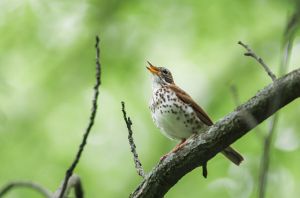
Wood thrush. ©CheepShot

On many evenings during spring and fall migration, tens of millions of birds take flight at sunset and pass over our heads, unseen in the night sky. Though these flights have been recorded for decades by the National Weather Services’ network of constantly-scanning weather radars, until recently these data have been mostly out of reach for bird researchers.

“That’s because the sheer magnitude of information and lack of tools to analyse it made only limited studies possible,” says artificial intelligence (AI) researcher Dan Sheldon at the University of Massachusetts Amherst. Continue reading “Using Artificial Intelligence to Track Birds’ Dark-of-Night Migrations”

Assessing Sea Turtle Populations: Can We Get a Hand From Drones and Deep Learning?

Post provided by PATRICK GRAY

An olive ridley sea turtle in Ostional, Costa Rica. ©Vanessa Bézy.

Understanding animal movement and population size is a challenge for researchers studying any megafauna species. Sea turtles though, add a whole additional level of complexity. These wide-ranging, swift, charismatic animals spend much of their time underwater and in remote places. When trying to track down and count turtles, this obstacle to understanding population size becomes a full-on barricade.

Censusing these animals doesn’t just satisfy our scientific curiosity. It’s critical for understanding the consequences of unsound fishing practices, the benefits of conservation policy, and overall trends in population health for sea turtles, of which, six out of seven species range from vulnerable to critically endangered. Continue reading “Assessing Sea Turtle Populations: Can We Get a Hand From Drones and Deep Learning?”